Apoteker Tepe
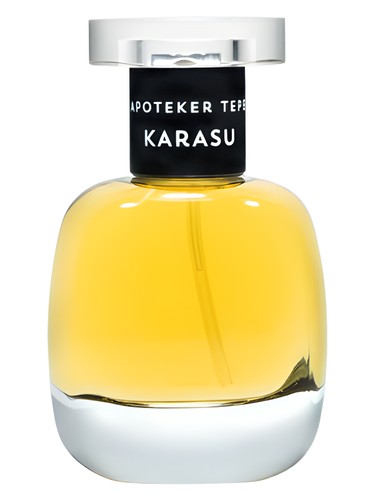
Karasu
Seu armário
Entre para dizer que você tem, já testou ou quer este perfume. Suas marcações ficam privadas por padrão.
Criar conta é grátis e leva menos de um minuto.
Acordes dominantes
- amadeirado
- especiado fresco
- papel
- aromático
- terroso
- especiado quente
Pirâmide olfativa
Saída
O primeiro impacto, nos primeiros 15 minutos.
Coração
A personalidade do perfume, por algumas horas.
Não informado pela comunidade ainda.
Fundo
O rastro que fica na pele até o fim do dia.
Não informado pela comunidade ainda.
Como ele se comporta
Fixação, projeção e ocasião — votos da comunidade internacional somados aos daqui.
Gênero
6 votos
Quando usar
- Inverno: 3 votos
- Primavera: 3 votos
- Verão: 2 votos
- Outono: 5 votos
- Dia: 4 votos
- Noite: 2 votos
Onde encontrar
Nenhum decant à venda nem vaquinha aberta agora. Marque Quero ali em cima — é o interesse da comunidade que puxa a próxima vaquinha.
Ver vaquinhas abertasQuem gosta deste também gosta
Perfumes próximos no gosto de quem curte este — bons candidatos para o próximo decant.
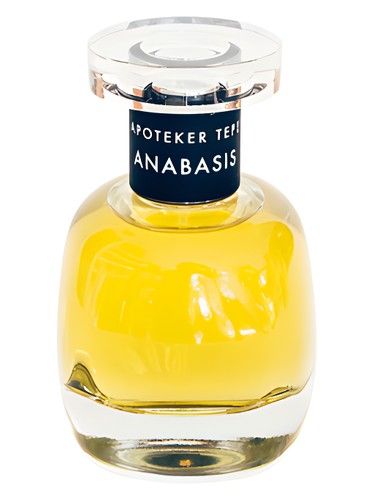
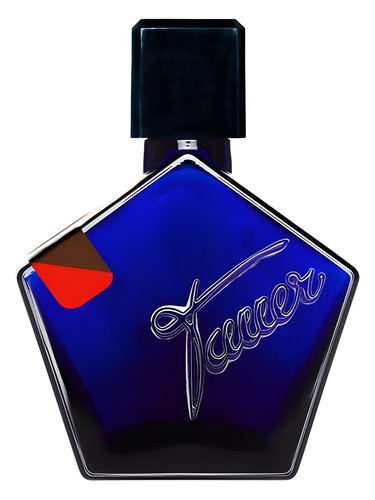
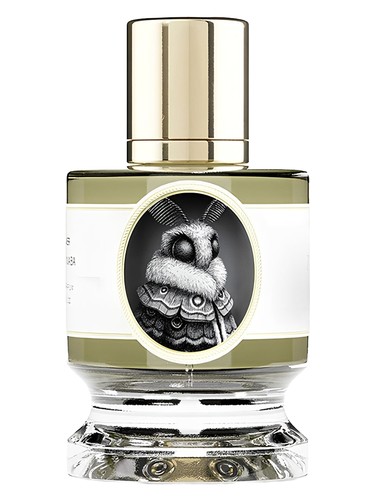
Impressões da comunidade internacional
Traduções chegam aos poucos — textos em inglês por enquanto.
- em inglês
I've been ruminating a lot lately. For example, the temporal shifts that change culture and shape man's search for meaning; the tug of war between spirituality and materialism. There is this fascination with the arc of a human individual's life, or even the life of a whole generation of people. For example, I have been watching actors in interviews in films over the decades and seeing them age and remembering when they were younger and realizing now that I have watched them age just as I am beginning to age myself. And then time doesn't seem limited at all. There are also these videos on Youtube of footage taken of people in public, in cities, out and about, living their lives, smoking cigarettes, having a cup of coffee, doing their shopping, laughing with colleagues. For example, if it's reels or video from say, 1973, I see those that are so young, maybe 20s or 30s, and now, 53 years later, they are elderly. Snap. And to me, that really doesn't seem that long ago, only five years before I was born. It's really just the snap of a finger in the vastness of time. Karasu, literally 'crow' in Japanese, is named for Karasu Tengo, the fierce forest spirits in Japanese mythology that often would take the form of this corvid. Composed around the components found in traditional kōdō, it is spare yet intimate, almost spartan in nature. I smell smoky yellowed papers, perhaps old love letters, postcards, shoeboxes filled with a life lived, loves gained and lost, heartache and fortune, from those no longer on this plane of existence. The dust of a past, the sediment of time passages, the evidence of physicality that is now destined to be part of the stars far away. Costus is prominent here, and is what makes Karasu most haunting, as it often smells shockingly animated and mammalian in its sebum-scalp-meets-orris-root nature. It's what makes it one of my favorite accords—few can communicate such a lived-in, human element as it can. The addition of siam wood (Fokienia hodginsii) oil here, with its warm and almost unctuous woodiness, enhances this effect. It may sound foreboding (and may very well be challenging to some), but to me it smells peaceful, like a reconciliation of sorts between the ever receding past and the live-wire present. It smells like the passage of time, at least as it pertains to humankind.
- em inglês
To me, This is what DS and Durga was attempting to do with Amber Kiso, but Karasu just does it far far better. They both have similar copy about the inspiration for the fragrance (temples in a Japanese forest, hinoki, incense rituals with traditional leather armor), but Karasu is just much more evocative of this imagery for me. this fragrance is simply amazing, as is most everything from Apoteker Tepe. This one might actually be my favorite of the line, which I was not at all expecting. It is strange, slightly challenging, but beautiful. It is a slightly smoky, slightly woody, but also slightly rubbery. The contrast of natural and synthetic is perfect, and it has a transparent, austere, and ephemeral nature, yet retains some hint of whimsy... But then there is also a hint of a human skin smell that is hard to pin down but very much there to me. Just an amazing creation. The smokiness is not like the smokiness in the more highly regarded Holy Mountain from the same line, but is a distant, long burned out fire. It’s not a campfire smoke, but one from a hearth, or a temple where tea was being made. Those are the associations I have with the fragrance. It feels somehow familiar yet distinctly different, like a clouded memory. Someone else mentions creosote smoke, which may explain why this perfume appeals to me so much, as one of my favorite fragrances is El Cosmico from DS & Durga, which has creosote as a very predominant note. Overall, I really don’t understand the low rating on here. It is every bit the equal of the other Apoteker Tepe creations (I got the sampler and found them all to be amazing), and perhaps the most interest and creative from the range. Edit: I now own a full bottle and upon wearing more liberally, I think the skin smell is actually just a really gorgeous suede, by far the best and most realistic suede I have smelled. Its not a raw suede, but a processed suede... you can smell the hide but also the solvent/tanning chemicals. So the fragrance is kind of a suede with a very light synthetic/chemical undertone and distant smoke, and absolutely beautiful. Haunting even.
- em inglês
Challenging, strange, unnerving beauty. Completely baffled my nose at first (chalky mud? cardboard? damp flaky plaster? orris root? tomato leaf? ) but in the most compelling and mysterious way. Smelled far more like a place than a perfume, for sure - redolent of organic life, yet no one specific spot or thing or creature or plant you can really put your finger on. Then morphs into slightly sweeter, more aromatic, more recognisable phases - yet it always stays mysterious - modulating from wood to incense to Avignon to Kyoto to the unknown. Ever-changing: it kind of shimmers on the nose. Very Zen, to my mind - a riddle for the brain, shot through with contradictions and surprisingly airy, dry, minimal space where you least expect it. Intriguing and weird and possibly great. Definitely one for the nature-organic-woodsy-moody loving oddballs, though. Not only are you unlikely to get compliments, many might not even recognise you as wearing fragrance at all. But you might feel so enlightened and lifted by it you wouldn't care, and rise serenely above all that.
- em inglês
Truly a scent that is hard to put into words and has to be experienced. I'm not familiar with the scent of costus root, but if this is it then it is quite odd and very nice. it's difficult to identify the idividual notes in this, but it is an immersive scent that gives me the impression of peat, wet boots, orris and a bit of smoke and tea. I don't really get the Japanese incense ritual here, but more of a sense of the outdoors as experienced on a wilderness backpacking trip. The smoky bits don't really translate to incense to my nose, but I like the atmosphere that this creates around me. Karasu is an odd fragrance that I love and wish would be brought back. My sample is running low and I'm starting to despair! It also seems to share some kind of DNA with Holy Mountain, despite them not having any listed notes in common. There is a thread of smoky incense and labdanum that links these two together.
- em inglês
I love perfumes with a paper accord. It's an incredibly difficult accord to pull off well, but, when done properly I instantly recall memories of being in very old libraries like the ones I visited in my hometown, and the library later-on when I went to an old university for my higher education. The libraries smelled of old, worn, stained wood shelves and the decades of individual odors living in the furniture. A fine aura of dry dust and must in the air. I'd pull an old leather-bound tome from the shelf, worn at the spine and the leather a bit darker in spots where it has frequently made contact with the oils of skin over many decades of reading. The woven fibers of the thick cream-colored paper smell a bit musty and woody, the pattern of the weave visible and palpable, unlike the thin and characterless composite papers used today. Sometimes you would get one that would smell a bit moldy, with slightly green and turned-fruit aromas, if it got a bit wet at some point in its life, or a touch resinous and incense-like if it was in the home of a smoker for a long period. The opening of Karasu pulls those smells and textures from my memory very clearly. As it warms up and dries down from the top notes it goes in a "burnt" direction. If you've ever smelled a cold fire pit, filled with the white-gray ash of paper and fragrant hard woods, it smells a lot like that minus the sharp earthy edge that ash can sometimes have. Throughout each stage of the perfume I clearly hear Holladay Saltz's unique voice; having tried several of AT's perfumes now, Saltz's style is becoming instantly recognizable. Similar to Jean-Claude Ellena in that Saltz's perfumes always have light weight, diffusive, and airy qualities to them, the difference is in texture. Ellena's perfumes sometimes feel a bit thin, and a bit elastic like cling film or like a heavy and slick mist, but also very luminous. Saltz doesn't have that cling-film or slick mist texture, instead presenting a texture that is like a gentle breath over your skin; there is a luminosity as well, but not the noon-day sun of Ellena, and more like the dimming light of dusk. Saltz seems to fully understand and accept their voice. A newer perfumer, like a new vocalist, is probably tempted to try out different vocal styles and songs until they mature in their craft and find their own unique self, but Saltz is confident and mature from the get-go and sings songs their voice can perform well. Karasu also seems to slightly correct an issue with several other AT perfumes that I've tried, mainly being that they lacked enough volume and power in their voices to convincingly sing the song (longevity and durability). The volume of Karasu is a whisper, just like the other AT perfumes I've tried, but the whisper is sufficiently sustained and pitch-perfect, and delivers a quiet power I haven't really found yet in other ATs. I really like Karasu, but I'm still not sure I'm sold on a full bottle. It's so unique I'm not sure where and when I'd want to wear it, but that's on me not the perfume. Without a doubt, it has convinced me that Saltz and Apoteker Tepe need to be paid attention to. There are some very good and unique things happening here.
- em inglês
The is the fragrance in the Apoteker Tepe line I was most excited about. I read reviews here and something about "unwashed scalp" appealed to me--I love scents that complement and work with my own body chemistry rather than just sit atop my skin and project itself. Those "je ne sais quoi" scents rather those "HI HERE I AM" scents. I...like? Karasu. I guess I do. I'm not getting unwashed scalp, but I definitely am getting tire rubber that never fully goes away. It's blended fairly well, but there is that synthetic note (the rubber) that I do agree dries down into a processed suede scent. It actually reminds me of one of my very favorite fragrances, Amber Kiso from D.S. & Durga. Rather than a leather note, Karasu has suede, and rather than maple, Karasu has something that reads as powdery. It's not a bad scent, but I don't know when I'd reach for this one, especially when I have other fragrances I prefer. Rubber, suede, powdery paper. Woods. Out of the ordinary, potentially challenging, but not bad.
- em inglês
Impressive in concept and execution, like the Holy Mountain. It's a scent of realistic dark smoke from smoldering paper just like the notes mentioned. If anyone has ever done a praying ritual for the dead in Asia, where people burn paper, this is the scent right here. There is also a scent of oily human skin mixed in. Someone said costus root has this human skin scent profile so I think this is it. This bottle is inspired by an incense ritual praying for a Tengu, and I think this scent expresses that pretty well. It's not a meditative kodo ritual in a pleasant temple in daylight but something much darker and more aggressive, like a small shrine in a dark forest at night with the Tengu nearby of course. Pretty amazing. But not wearable IMO. Fun to sample though.
- em inglês
This is my third trial of Karasu, and I find myself wondering at its low rating. This reminds me of The Peradum, and comparing Kerasu to that perfume, there is a similar structure to the coda. They are both dry perfumes. The same aridity that is at the heart of a good French white wine, sequentially there is paper, the smoke evoking material this perfumer uses, and finally spice. Something precious on paper got burnt in this perfume, and all that remains is a slight remnant of cardamom, smoke and whatever personal loss smells like.
- em inglês
Opens with a thin, sour, almost 'cruel' smokiness and bracing green notes which slowly gives way to sweetness and spiciness. For me, the cardamom appeared, but not until hour six, just folded gently into the base (which I would call Apotekerade due to my other samples from the house) which is warm, dusty, and almost cloying. These aren't scents you wear for others but yourselves. Absolutely screams for a solitary walk on a crisp fall day. Longevity is, like other offerings from this house, exceptional.
- em inglês
Karasu opens with a rather minimalist aura of dry amber and makeup-y, buttery iris, which quickly becomes more like wood bark and iris. I can see how it evokes "paper", but definitely a brown rustic handmade paper rather than a crisp 8 1/2 x 11. And it's still blended with tons of that pale, squashy, waxy iris -- not my favorite note, but interesting. A few minutes in, I also start to get a very dry spice and a vague sense of "outdoorsiness" from the cedar. While it's intended to evoke a Japanese incense ritual, to me the effect is more like "sleepaway camp at a long-forgotten retreat center" -- wood-paneled rooms, unscented waxy lip balm in your backpack, and trees all around. Over time a lightly smoky note comes to the fore -- it's what I think of as the "tree bark" chord, very dry and a little phenolic. It's still undergirded by that balmy, waxy iris. Reviewers tend to find Karasu challenging. I don't think it's at all unpleasant, just minimalist. It's a steady medium brown and off-white all the way through, with nothing ornamental or dramatic going on. It's in the same "minimalist woody iris" genre as Bruno Fazzolari's Feu Secret.
- em inglês
I recently switched to a mattress that's stuffed with wool, and I can smell that nice clean sheep odor when I put my nose against the sheets - it smells like hay + whatever oil from the sheep is coating the wool fibers, and it smells lovely. I don't necessarily want to smell like this all day myself, but was curious if I could find a fragrance that captures it. Karusu very much does NOT smell like my wool-stuffed mattress... at first. The costus or whatever is STRONG and stifling and unpleasant when first applied, to the point where I decided it was a scrubber and washed my hand with soap and water. That didn't get rid of it entirely though, and now two hours and a couple hand washings later, it does smell a lot like my mattress. So I think they were on the right track here, and maybe a version of this that's just the base notes is what I'm actually wanting.
- em inglês
Very simple. Smells like burnt paper and trees. There’s not much else to it. Very weird and very accurate but definitely try a sample before you buy full sized. Not very wearable but it’s an interesting scent.
- em inglês
It smells like chicken hencoop and wet cardboard, somehow in the drydown an oud style woody aspect also emerges. It's too weird to be considered a perfume, but more of an artisanal/experimental scent.
- em inglês
not sure how I feel yet. I've only tried on a blotter, not yet skin, but very quickly went from kids outdoor playground to kids doctor's waiting room.
- em inglês
this is WAY too much. I sprayed it once, and immediately wanted it off me.
- em inglês
Karasu by Apoteker Tepe is a perfume dominated by a strong note of costus root (Dolomiaea costus), ...yes, powdery, earthy, oddly animalic costus root. As such, it is a rather unusual fragrance, sitting somewhat outside of perfumery's established genres. Costus root does possess a vague 'rooty' similarity with such materials as carrot root and orris rhizome, but the former is more complex and extreme in its nuances. Karasu's other notes of Hinoki (Chamaecyparis obtusa) and Siam wood (Fokienia hodginsii), do add a calm, woody tone and make the whole composition more palatable, ...but it is the costus root that makes Karasu memorable. By the way, that listed note of paper seems mostly to be a desperate attempt at understandable comparison. ...There are other paper/book scents out there if that note is sought. Apoteker Tepe seems to revel in creating oddly distinct fragrances, and they should be commended for being so daring. However, 'oddly distinct' is hardly a synonym for likeable or wearable, and many such experiments have only limited commercial appeal. having said that, I believe Karasu is a scent that could find a fanbase of genuine admirers. Yes, there are some pungent animalic and medicinal facets in its scent profile, but the more widely appealing powdery and woody nuances of the scent mostly keep it from dipping into any absurd degree of extremism. As an aside: If you can dare to smell an Apoteker Tepe fragrance that has lost the plot, sample Brother Night, a smoky copal and marigold composition that mostly crosses a line into a sweat-like realm of tarry grease and decomposing vegetation. I only mention it here, because Fragrantica has yet to give it is own profile page, and quite possibly never will. As for the perfume name, in Japanese, karasu literally means 'crow', ...and a karasu tengu is a ghostly nature spirit that takes the form of a crow. The connection seems to be only a personal or esoteric one, but why not? Certainly an odd name is fitting for an odd scent. Though Apoteker Tepe is listed on Fragrantica as a separate brand, its samples come bottled in Pineward spray As I understand it, both brands are now product lines of the same company, but originally created by different perfumers.
- em inglês
This for me is the prototype 'weird' -- it is just SO antithetical to what SOOO many people would deem 'perfume'. It ticks ALL the boxes for perfume -- no doubts -- but there are SOOO many people who would utterly HATE this scent, and even go as far as NOT defining it as scent. Don't get me wrong, I don't like it AT ALL -- I could never wear it -- astringent, high-pitched, metallic-ish and UTTERLY weird -- BUT I LOVE IT -- I love that I have had the experience of being able to ever experience this -- for someone to create this, and put it out, I am just so happy that it exists for me to trial. I get the woods, it's likely a heartwood hinoki, likely (not 100%), the costus is otherworldly -- completely and utterly plasticky, synthetic and unbearable (in a lovable way) -- it's an extension of high-irone orris in its plasticness -- you have to be in the right mood to wear this -- the paper element reminds me a crude cardboard crushed and bailed (from when I used to work in a supermarket) -- it has a distinct aroma, and whilst this doesn't replicate it PERFECTLY, it is in the ball park. This is paired perfectly. I really REALLY don't enjoy this for wearability, but I LOVE how well it's put together. It's so artistic and cerebral -- more than I can handle -- and I really have enjoyed this.
- em inglês
A complicated and austere fragrance. The opening to me is a combination of Japanese incense, creosote smoke, and burning rubber (the costus, i believe). A challenging opening, meditative and cold. The smoke subsides a bit after about 30 minutes, but never leaves entirely, making room for the hinoki wood, which provides a subtle yet bracing airiness. I detect no cardamom. We'll see how it lasts and how the drydown develops, but the projection through the opening and mid is modest yet noticeable. This is definitely a unique scent, far away from anything mainstream. It brings to mind fragrances like CdG Avignon, or a far more subtle, rounder and colder Montale Full Incense. Overall, this one grows on you, but once you "get it", it's beautiful and contemplative. I'll be enjoying this one for myself, expect no compliments on it, and do not care.
- em inglês
This smelled like costus root for almost 5 hours straight until it transitioned into a cardamom note. Costus root has an unwashed scalp scent profile and the opening of this strongly reminded me of the discontinued Fille D’Eve by Nina Ricci. I picked up green and wood vapors along the way but they were more of a backdrop for the costus. Intriguing scent that needs to be explored more in order to wrap ones head around it. I wonder now how it compares to Holy Mountain. Too bad this entire line had gotten discontinued. Holladay is a talented perfumer and I hope she remains in the business instead of locking up shop and disappearing from right under our noses...
- em inglês
I think this is totally wearable honestly! I find it kind of similar to Scent Trunk Beeswax except with zero trace of any kind of sweetness where that one might have a drop or two of it. I don't get anything plastic or rubbery, just lots of hinoki and woods, a waxy costus, and lots of smoky burnt paper - it doesn't smell quite as acrid as true burning paper which is probably a good thing. Projects like crazy and lasts a long time too. Go easy on the sprays and while it isn't going to be a crowd pleaser I don't think this will be offputting to people in public either.
- em inglês
this starts off very, ummm...weird. i hate that word. weird. as a teacher, it's my least favourite adjective. anyway, this one starts off weird. there's a dense green, vegetal astringent plastic note at the beginning. it's not brutal or anything like that, it's just there. a little off-putting, but nothing major. dries down to something kinda dry and non-perfumey. vague, i know, but i really don't know how to describe it any other way...
- em inglês
I wanted to love this! The notes are right up my ally. But while it goes on woody and lovely, it dries down with a plastic note that I can't abide. I had to scrub it in the end. Try before buying a full bottle.
- em inglês
Lightly astringent, mentholated pine and woods. Complex and effective blending. 7/10 This has been another edition of "LittleDinkums Reductive Reviews."
- em inglês
For those who are interested, Apopeker Tepe's line has been bought by Pineward Perfumes and will soon be available on PP site in original formulations!
- em inglês
Powdery deep musky licorice on first spray, dries to something muskier and more profound.
Resenhas da comunidade
0 comentáriosEntre na sua conta para comentar e resenhar.
EntrarAinda ninguém resenhou este perfume
Seja a primeira pessoa a contar como ele se comporta na pele: projeção, fixação e a ocasião certa.
Encontrou um erro ou falta informação? A comunidade melhora o catálogo junto.