DI SER
Kyara
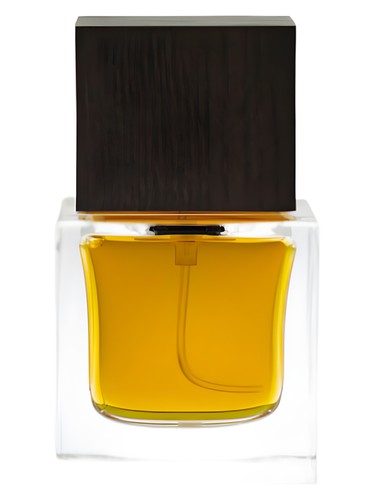
Seu armário
Entre para dizer que você tem, já testou ou quer este perfume. Suas marcações ficam privadas por padrão.
Criar conta é grátis e leva menos de um minuto.
Acordes dominantes
- amadeirado
- rosa
- patchouli
- oud
- especiado quente
- talcado
Pirâmide olfativa
Saída
O primeiro impacto, nos primeiros 15 minutos.
Coração
A personalidade do perfume, por algumas horas.
Não informado pela comunidade ainda.
Fundo
O rastro que fica na pele até o fim do dia.
Não informado pela comunidade ainda.
Como ele se comporta
Fixação, projeção e ocasião — votos da comunidade internacional somados aos daqui.
Gênero
5 votos
Quando usar
- Inverno: 4 votos
- Primavera: 3 votos
- Verão: 2 votos
- Outono: 4 votos
- Dia: 2 votos
- Noite: 3 votos
Onde encontrar
Nenhum decant à venda nem vaquinha aberta agora. Marque Quero ali em cima — é o interesse da comunidade que puxa a próxima vaquinha.
Ver vaquinhas abertasQuem gosta deste também gosta
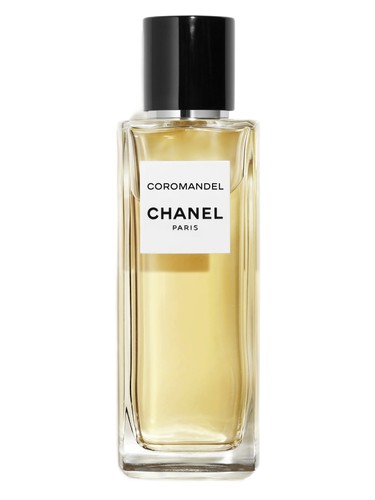
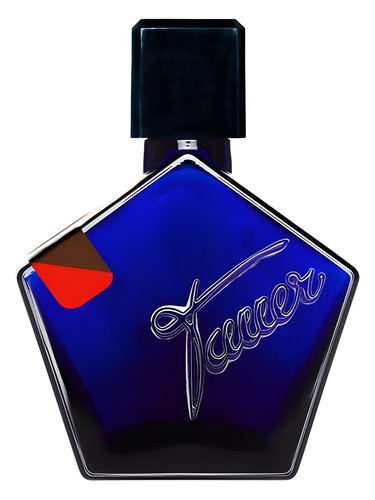
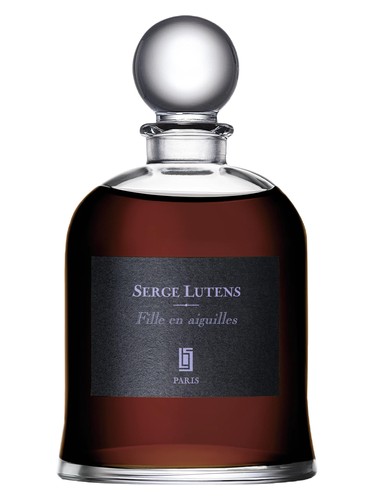
Perfumes próximos no gosto de quem curte este — bons candidatos para o próximo decant.
Impressões da comunidade internacional
Traduções chegam aos poucos — textos em inglês por enquanto.
- em inglês
Kyara is not a material for smelling. It is a material for listening. In kōdō—the Japanese way of incense—one does not smell the wood; one listens to it. Monkō, listening to scent. The usage is not poetic ornament, and it is worth pausing on why. The wood is not burned. A sliver of kyara is set on a thin mica plate above buried charcoal and brought only to the temperature at which it releases its aroma—short of smoke, short of combustion. And to "listen" is itself a deliberate, near-ritual act: one takes the censer up, cups it in the palm, brings it to the face, and inhales in a prescribed way, two or three times, attending to the scent's changes across time. One does not stand in a drifting cloud; one goes actively toward the scent. This is the mode of attention the word names. The grading system of rikkoku gomi—six provenance categories (kyara, rakoku, manaka, manaban, sumotara, sasora) and five tastes (sweet, bitter, sour, spicy, salty), by which a piece of wood is identified, judged, and ranked—was refined, principally from the medieval period onward, within a tradition of incense-wood appreciation more than a thousand years old. It is a system built for this act of listening. What Yasuyuki Shinohara's Kyara (2000) attempts is to carry this material—made to be listened to—into a form made for smelling, that is, into perfume. And this transfer is not a mere change of medium. It is an act that puts in question the very identity of the material. Because—and this is the central claim of the present essay—kyara presents a different chemical profile when listened to than when smelled. This is not a metaphor. A finding from peer-reviewed analytical chemistry supports it. Among the compounds that most characterize the scent of kyara (Kynam) are the 2-(2-phenylethyl)chromones (PECs). One study, comparing the incense smoke of agarwood from several provenances, reports a decisive fact: these chromones were characteristically detected in the smoke of kyara-grade agarwood among the varieties compared, and constituted its major component (around 27%). The study analyzed combusted smoke rather than the gentler heat of monkō; it nevertheless suggests a broader principle: heating shifts the aromatic profile toward these chromones, though the extent to which this applies to monkō cannot be stated with certainty. This is one face of the kyara heard in kōdō. When the same resin is drawn out as an oil—by steam distillation or solvent extraction—what most often occupies the center of the scent is, instead, the sesquiterpenes: agarospirol, jinkoh-eremol, α-eudesmol, a heavier, woodier, more animalic-leaning skeleton. The kyara of smoke and the kyara of distilled oil come from the same resin, yet differ in the molecular ensemble that reaches the nose. From here, a proposition concerning the identity of materials comes into focus. The identity of a material depends on the regime of attention directed at it. The same kyara is, under the regime of monkō (heat, concentration, a single material), primarily a chromone-dominant material; and under the regime of perfumery (room temperature, diffusion, composition), primarily a sesquiterpene-dominant one. It is not that there is a single essence—"the scent of kyara"—that two cultures then handle differently. The regime of attention itself determines which kyara appears. The regime constitutes the material. Not that it alters the resin itself: what the regime constitutes is the material as it reaches perception—which face comes forward, not the physical composition of the wood. Here a misreading must be sealed off. This is not the commonplace chemical fact that "two kinds of oil can be drawn from one tree." Both the chromones and the sesquiterpenes are, always, latent within the resin. Heat does not generate the chromones; it opens the window of volatility in which the chromones stand dominant. Distillation does not generate the sesquiterpenes; it opens the window in which they stand dominant. The two profiles are not two states of the material. They are two distinct windows opened onto one and the same latent whole. Chromones and sesquiterpenes are not the cause but the symptom—the cause lies on the side of the regime that decides which window opens. The proposition, therefore, is not a claim about differences in chemical composition. It is an epistemological claim about what decides which difference becomes present. With this proposition in hand, the true problem of the perfume called Kyara takes shape. Shinohara is attempting an impossible translation: how to evoke the kyara that appears only under the regime of monkō (the chromone kyara, heated, listened to with concentration) within the regime of perfumery (the kyara that diffuses at room temperature, is composed with other materials, and is smelled in passing). This is a problem of a decisively different order from that of the ouds I have discussed elsewhere. Shadid constructed an oud without oud—evoking the darkness of the material by citation, without using a single drop of it. Nawab of Oudh foregrounded oud as a place-name and withdrew oud as a material into the background. Oud Zarian, by controlling the fraction of the distillation, redeemed a register of light that oud has always contained but that Western production has tended to suppress. Amber Oud placed oud as an absent center, throwing the surrounding structure into relief. All four—whether they use the material or not, foreground it or withdraw it—handled oud within a single regime: Western perfumery. One material, one regime. The question was how to arrange that material. Kyara's question lies one step before this. The material itself multiplies according to regime. What Shinohara faces is not "how to arrange kyara" but "which kyara to bring forward, and how, within another regime." Where the four ouds were problems of the arrangement of a material, Kyara is a problem of the identity of the material. This is what separates the fifth panel, fundamentally, from the other four. The dimension Western oud criticism never finally entered—that the identity of a material is relative to a cultural regime—becomes, here, the theme. How, then, did Shinohara answer this impossible translation? Follow the scent. A paradox must first be noted. Di Ser distilled kyara. So scarce is kyara that it is almost never used for the distillation of oil. Shinohara distilled it—using, by Di Ser's own account, a stock held by the Sapporo research institution that is the house's parent body. This perfume, in other words, is built from the very outset upon a transformation: the physical conversion of a material-for-listening into a material-for-perfumery. Through the operation of distillation, the window in which the chromones stand dominant closes, and the window in which the sesquiterpenes stand dominant opens. What rises is no longer the kyara heard in kōdō. The same resin, yet a different kyara, appearing through a different window. What Shinohara held in his hands was kyara displaced into the regime of perfumery—a face one could never have met above the incense burner. And here Shinohara's choice stands out. He did not try to recover the lost chromone kyara (the heated, listened-to kyara) by synthesis or reconstruction. Rather, he took the sesquiterpene kyara obtained by distillation as his point of departure, and chose to rebuild around it the experience of monkō—not as material, but as atmosphere. The opening is sharp, medicinal. A minty, near-camphoraceous, stinging coolness rises. This is the first face of kyara as it appears through the window perfumery has opened. The sweetness of the kyara heard in kōdō—the honeyed register the chromones carry when heated—is not visible from this window. What stands in the foreground instead is the cold resinousness that remains in Vietnamese kyara oil, the register that the vocabulary of rikkoku gomi would assign to "bitter" and "spicy." That Shinohara begins from this coldness is less a clever choice than an honest one. For what is hardest to reproduce under the regime of perfumery is precisely the sweetness of the chromones—the face visible only from another window. Rather than counterfeit what lies beyond the lost window, he sets in the foreground, without hesitation, what is genuinely reflected in the window he has opened: the cold resinousness. In the depth of that coldness, a rose is concealed. Rose otto, but not the showy kind—a smoked, smoldering rose. It lends a faint warmth and roundness to the sesquiterpene wood. Cedar, patchouli, and sandalwood add depth and persistence to that wooded space. A texture one wants to call the cleanest of woods—an ambergris of wood, one might say, dry and radiating and spare. There is nothing animalic here. Vietnamese kyara oil, unlike the barnyard ouds of India, lacks the fecal, bestial register. What remains is a dry, radiating, spare wood. Here is the translation, by perfumery, of the experience of monkō. When one listens to kyara in kōdō, one concentrates one's attention on a single material and, in that stillness, listens for the scent's changes. Shinohara's Kyara tries to reconstruct that "concentration upon the single" and that "stillness" through the very structure of the perfume. It is never loud. It does not ring out; it seeps outward. Across eight or nine hours of persistence, it does not overwhelm the wearer but dissolves into them, radiating their image quietly. To be not-loud—that, in itself, is the translation of the regime of monkō into perfumery. But here criticism must halt. For this translation has a structural limit. And that limit derives not from a flaw in the perfume but from an impossibility the translation carries in principle. In monkō, the essence of the act of "listening" to kyara lies in the regime of attention itself. To concentrate the whole of one's attention on a single sliver of wood, to shut out all else, to listen for the scent's minute changes across time—that active, ritual mode of concentration, and a concentration the form itself demands, is what makes monkō monkō. The scent is not on the side of the object. The scent is generated within the act of listening. Perfume cannot transplant this regime of attention—but not for the reason one might assume. Perfume does not forbid active concentration; critics and devoted enthusiasts "listen" to perfume every day. The distinction lies elsewhere. In monkō the activity is internal to the form and compelled by it: one takes the censer up, cups it, brings it to the face, inhales in a prescribed way, and without that procedure monkō does not occur. Perfume permits such attention but never requires it—it remains perfume whether actively pursued or passively met. And the activity of monkō is sustained, besides, by an institution that gives it meaning: the codified procedures, the connoisseurship of rikkoku gomi, a ritual tradition a thousand years old. The concentration a perfume critic brings comes from outside the form; the two activities may resemble one another, but structurally they are not the same. This is the strongest consequence of the present essay's central proposition: the regime of attention constitutes not only the material but the experience of the medium itself. And beneath both the compulsion and the institution lies the deepest reason of all. In monkō, as was said, the scent is generated within the act of listening—not a fixed object awaiting perception, but something brought into being in the active attending itself. This is why the matter is not one of degree. One might object that perfume too has its institutions—the culture of reviewing, the vocabulary of the trade—and that only their development differs. But if the scent of monkō is generated in the act, a medium lacking the act lacks not a degree of that scent but its very ground. The institution sustains the act; the act generates the scent. Remove the act, and there is no scent of monkō to be had—only its material, displaced into another regime, awaiting a different attention that will generate a different scent. This is what Shinohara could not carry, and could not in principle: not the material of monkō, which he evoked with great skill, but the form that generates its scent. It is the untranslatable remainder between two regimes. What even the most exquisite translation cannot carry—that is the very mode in which the original is read. Here the value and the limit of this perfume exist at once. Kyara, within the regime of perfumery, has reconstructed with astonishing precision both the material of monkō and the impression of monkō's stillness. It embodies, as a work, the dimension Western oud criticism never finally asked after—that the identity of a material is relative to regime. In that sense Kyara is the missing fifth panel of my essays on oud, and casts its light back on the other four. Where Shadid spoke of citation, Zarian of fraction, and Amber Oud of absence, Kyara speaks of the identity of the material itself as a function of cultural attention. But Kyara will never become monkō itself. It is a translation, a magnificent one, of the material of monkō into another regime. And as all fine translations do, it attests at once to love for the original and to distance from it. What is in the bottle is kyara. But not kyara to be listened to—kyara carefully displaced, as kyara to be smelled, into the regime of perfumery. To the precision of that displacement, I pay the highest respect. But in the single point that a translation can never become its original—and since that point is to be charged not to Shinohara but to the limit of the form itself—I do not call this perfume perfect. It is the most faithful achievement possible of an impossible translation. 8.5/10 —— A note. This essay owes its central argument to findings in analytical chemistry concerning the compositional difference between the incense smoke and the distilled oil of kyara. The study cited shows, under conditions comparing agarwood of several provenances, that chromones appear as a characteristic major component in the heated smoke of kyara-grade agarwood; it is neither a universal proposition about all agarwood nor a GC-MS analysis of the specific kyara distilled oil Di Ser used. The statement that "sesquiterpenes occupy the center of the scent in distilled oil" is a reasonable inference from a body of literature on the composition of agarwood oil in general—where provenance variation is also large—and not an analytical fact about Kyara's specific formula. And the correspondence between the registers of rikkoku gomi and specific compounds (the camphoraceous quality with "bitter" and "spicy," and so on) is an attempt to read a traditional kōdō taxonomy chemically, not an established table of correspondences. These should be read with verifiable fact and the inferences resting upon it held apart.
- em inglês
The olfactory antidote to the stresses of living in a time of great disharmony and uncertainty around the world, Kyara is very probably the most beautiful fragrance I have ever smelled. It is sublime. As is mentioned in reviews below, "Kyara" is the name of the oud wood most highly prized in Japan and China. Minuscule chips of this vanishingly rare wood, which must be Vietnamese agarwood from trees more than 80 years old to truly be considered the real deal, sell for astronomical prices (over ¥75,000/gm). The considerable size of the hunk of kyara needed to tincture a workable oud oil is large enough that only a very few suitable pieces exist. Obviously, then, the cost of this tincture is breathtaking and creating it for the purposes of blending it into a fragrance borders on insanity. Of course, there is a fine line between genius and insanity and the perfume Di Ser created via this process is clearly on the genius side of the line. I'm a walking thesaurus, but words fail me where describing this scent is concerned. The oud is unlike any other. It is clean, completely without animalic elements and faintly medicinal, camphorous, & at times bordering on minty, but this description is just an approximation and does no justice to the depth and complexity of the smell. To smell kyara is to almost instantly enter a calm, contemplative state of mind. Recently, following the abrupt end of a relationship that was indescribably important to me, I was in great emotional pain. I took to spraying a single spritz of this fragrance on my wrist at bedtime as a means of calming my tumultuous mind and roiled emotions. The effect of this scent is so profound for me--it brings serenity when it is needed most--& that it is magical. The ingredients that are compounded with the kyara tincture in this fragrance are all exceptionally good. The Japanese Hamanasu rose used here is delicate, beautiful and similar, but by no means identical, to tuberose. It adds a faint hint of powdered sugar sweetness to the fragrance. There is a sparkling citrus in the opening and a bit of clean, bright patchouli in the heart. In the base, a smooth blend of hinoki and sandalwood emerge. These additions take this fragrance beyond being simply the most breathtaking oud oil imaginable and instead create a properly compounded and blended perfume of almost devastating beauty. The fragrance lingers tenaciously, with the magical kyara odor present to the very end of a greater than 8 hour longevity on my skin. Projection is restrained throughout. At nearly $1100 for 33 ml, the price of entry to this quasi-religious experience is high, or course, but given the cost of the ingredients used, I find it utterly justified. I do not wear this fragrance out very often. Rather, I use it for my own contemplative enjoyment whenever I tire of stress and turmoil in my life. If your budget allows you to, you need to get at least a small sample of this spectacular fragrance so you can experience it for yourself. Kyara is the very zenith of artistry in fragrance. I feel privileged to own a bottle.
- em inglês
My scent of the evening is Kyara by Di Ser, many thanks to Professor Rajesh Balkrishnan! Kyara opens on my skin with clean Japanese rose, green, earthy patchouli and the star of the show, a mentholic Kyara Agarwood. In the heart, most other notes fade away and I’m really just entranced by the Agarwood, which quickly turns extremely resinous in my skin. This is certainly the most spiritual perfume out in the world right now. Ive been going through a very stressful harvest season on the west coast due to the fires, and wearing this has allowed me to clear my mind of my daily stressors, and simply meditate, while focusing on the Kyara aromas spiraling off of my wrist. I’ve really never smelled anything like this, so I’m struggling to think of notes for the heart and base. To me, it’s like the cleanest cedar you could ever imagine, yet magnify that scent 1000X! Also add hints of whispy, minty, cooling smoke. That’s my best try at describing it, but, words don’t do it justice. If you’re curious, I recommend everyone wear this, and do nothing, other than focus on the scent! Purchasing the sample from luckyscent really is worth it in that regard; you really do have to smell this to understand it.
- em inglês
The most beautiful perfume in the world today in my opinion, Kyara represents the Mount Everest of spiritually pure perfumery. This is the true equivalent of religion in a bottle. The perfume has a central note of pure and extremely difficult to distill Kyara Agarwood. This is surrounded by delicate natural notes of Japanese Rose, sandalwood, patchouli and hinoki (Japanese cedar) . This is not your typical loud Rose Ouds that populate the market today. It is a delicate, austere and shimmering Zen beauty that just caresses your skin and takes you to a higher spiritual plane never ever experienced before in modern perfumery. Kyara Agarwood is completely bereft of any animalic quality and Japanese Rose is so ethereally divine. Neither of these notes have been blended like this in modern perfumery. Frightfully and justifiably expensive. Make no mistake, this is closest a perfume will take you straight to heaven. Enjoy!
- em inglês
Not just a fragrance...an experience Kyara opens with exactly that: Kyara. Sweet, piercing mint/camphor is the best way I can describe its scent profile. Added to that is a young, spicy-green patchouli, which compliments the Kyara perfectly. Soon afterward, a touch of cedar appears underneath. A deep Rose begins to show itself, rising in a crescendo to equal the Kyara and Patchouli. The Sandalwood is barely noticeable. Needless to say, this fragrance is actually worth it’s hefty price tag...maybe more. If you have the means, grab a bottle. I’m no expert, but I feel confident enough to say Kyara Agarwood is disappearing by the day and prices will only continue to rise.
Resenhas da comunidade
0 comentáriosEntre na sua conta para comentar e resenhar.
EntrarAinda ninguém resenhou este perfume
Seja a primeira pessoa a contar como ele se comporta na pele: projeção, fixação e a ocasião certa.
Encontrou um erro ou falta informação? A comunidade melhora o catálogo junto.