Estée Lauder
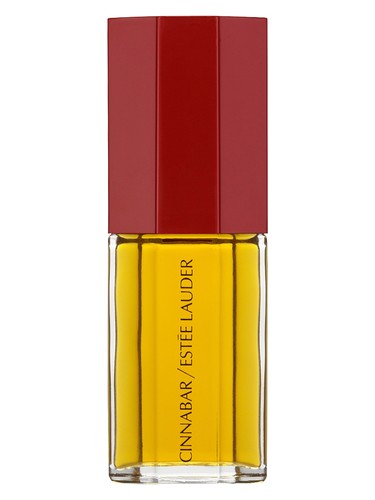
Cinnabar
Seu armário
Entre para dizer que você tem, já testou ou quer este perfume. Suas marcações ficam privadas por padrão.
Criar conta é grátis e leva menos de um minuto.
Acordes dominantes
- especiado quente
- âmbar
- amadeirado
- balsâmico
- talcado
- canela
Pirâmide olfativa
Saída
O primeiro impacto, nos primeiros 15 minutos.
Coração
A personalidade do perfume, por algumas horas.
Como ele se comporta
Fixação, projeção e ocasião — votos da comunidade internacional somados aos daqui.
Gênero
27 votos
Quando usar
- Inverno: 46 votos
- Primavera: 15 votos
- Verão: 15 votos
- Outono: 47 votos
- Dia: 34 votos
- Noite: 53 votos
Onde encontrar
Nenhum decant à venda nem vaquinha aberta agora. Marque Quero ali em cima — é o interesse da comunidade que puxa a próxima vaquinha.
Ver vaquinhas abertasQuem gosta deste também gosta
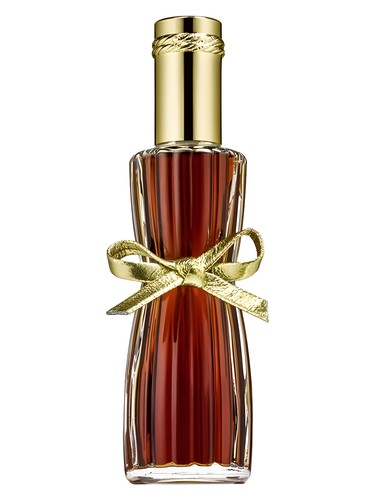
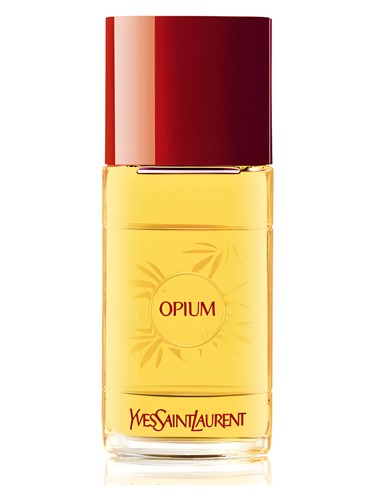
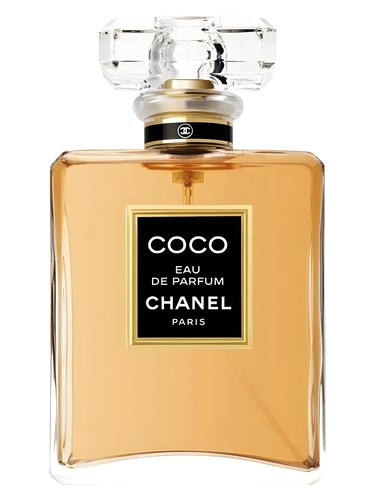
Perfumes próximos no gosto de quem curte este — bons candidatos para o próximo decant.
Impressões da comunidade internacional
Traduções chegam aos poucos — textos em inglês por enquanto.
- em inglês
A WELL-KEPT SECRET "By my window pane, I keep oranges, limes and peaches from Andalusia. On my dresser, I painted flower pots with roses and jasmine. An ancient bowl is filled with cloves, vanilla beans and cinnamon stalks. On my bedside table, there is a brass oil lamp I brought from Arabia. Its oil is clouded with balms and myrrh. It is here I want to meet you at sunset, and spend one or many wise nights." This piece of text is an excerpt from an old poem. In my imagination, these words seem to describe in detail the scent of Cinnabar. This classic Estēe Lauder perfume was co-created by Bernard Chant and Josephine Catapano, two legendary perfumers of the 1960s and 1970s who were the "noses" behind many of the Lauder Group's creations. It was also rumoured at the time that Estée Lauder herself secretly added the last portion of ingredients to keep the secret of a new fragrance solely with her. And by the mid-1970s, secrecy was already key to the business. Both Yves Saint Laurent and Estée Lauder had undertaken a task aiming to revolutionise perfumery, with a new oriental intense fragrance. "Opium" (1977) by Yves Saint Laurent was a direct blow to the bland (bland? really?) citrus and moss scents that were conquering the perfume world at the time. The new YSL perfume was a joint creation of Jean Amic, Jean-Louis Sieuzac and Raymond Chaillanand. Lovers of the fragrance were dazzled by its erotic sophistication. The same situation happened with Cinnabar. But the impact was diminished as it was seen as an Opium copy, only because it was launched a few months later. No doubt there are some similarities between both perfumes, but there are also important differences to consider. First of all, the name "Opium" was deliberately provocative. In the USA for instance, the perfume only became widely available after a study showed that the product did not encourage drug usage. However, it not only had a strong oriental character but was also stunningly erotic and overpowering like no other perfume before it. A launch party at Studio 54, where Andy Warhol was also a guest, turned into an "opulent bacchanal" as described by the press, rather than an industry premiere as expected. The fragrance confronts us with strong frankincense, myrrh and a turmoil of various other resins. The balsams fight their way through a fierce army of spices including cloves, cinnamon, pepper and coriander, as well as a variety of sweet florals. A fresh, pungent carnation note serves as the referee in this energetic and voluptuous game. The fragrance revealed itself as mysterious and luxuriant as only some occult oriental ambiences and atmospheres can be. In contrast, the name of "Cinnabar" (1978) by Estēe Lauder stands for a bright red mineral (mercury sulphide), sometimes used as an orange or reddish pigment, the colour that both perfumes flasks also have in common. The name may also suggest "Cinnamon Bar", possibly a reference to the strong warm cinnamon note it contains. Although Cinnabar is obviously very oriental and close to Opium in fragrance style, it doesn't remind me of an Arabian caravan loaded with many different spicy and smelly goods on its way to a remote Souk. I picture it more in the style of a flamboyant and elegant James Dean driving down the Pacific Coast Highway in a Porsche 356. If Opium may stand for a half-naked Sherazade behind veils and curtains, Cinnabar reminds me of a typical, very well-dressed American socialite from the 60s and 70s strolling along Rodeo Drive. The spice blend is a little fuzzier and less lush. I also detect warm notes of caramelised mandarin or orange, the inevitable strong carnation and the characteristic "Lauder" accord dominated by cinnamon, flowers, incense, resins and balsam (mainly tolu), which we also find in other creations such as "Youth-Dew" by Estēe Lauder". Cinnabar does not assault us with an array of blunt spices. On the contrary, it wraps them in the surrounding balsams and woody notes, in a seemingly orderly way. These are very beautiful accords but in the form of a well-conceived beauty, a beauty that does not at all give us the arousing and sensual impression of its Opium rival. Certainly because of its intrinsic quality, but mainly because of its lead time and commercial daring, Opium won the market war between the two competitors, and slowly Cinnabar became a well-kept secret of an exceptional fragrance that could have led the way in the perfume industry. How can we rate this masterpiece? ___ ___ ___ ___ ___ ___ ___ ___ - Opening: 9.0 (Caramelised citrus with warm spices and cloves, giving way to a heart with strong cinnamon, a bold carnation and sweet flowers.) - DryDown: 10.0 (The cinnamon endures till the dry-down is coveted by incense, balms, resins and a woody touch.) - Longevity: 9.5 (3 sprays last up to 12 hours) - Sillage: 8.5 (6~7 feet of sillage and up to 3.0 hours of projection with 3 sprays) - Uniqueness: 9.0 (similarities with "Opium" (1977) by Yves Saint Laurent and "Youth-Dew" by Estēe Lauder) - Wearability: 8.5 (not suitable for hot weather) - Versatility: 7.5 (can be worn almost anywhere, but never in the office, beach and gym, I recommend it as a fragrance for dusk or night) - Praise: 9.0 (it will reward you with lots of compliments and some passionate praise). - Quality: 10.0 (Fantastic) - Presentation: 7.5 (Simple and very discrete; the revised "Cinnabar" (2015)by| Estēe Lauder, is a lot prettier) - Price: 6.0 (125~150 euros / 50ml vintage bottle) ___ ___ ___ ___ ___ ___ ___ ___ Overall rating: 8.59 / 10.00 - between 7 and 8 = above average; - between 8 and 9 = recommended; - above 9 = definitely not to be missed; My opinion: This is a perfume that I consider timeless and a striking masterpiece. Both its "somewhat outdated" scent (not for my nose), as well as its high price on the parallel market, justify never making a blind purchase. The "modern "Cinnabar" (2015) by Estēe Lauder is much easier to use, more feminine, and more "tame" than the vintage version. The vintage version is "only" a phenomenal perfume and a truly very precious item on any collector's shelf. Music: John Travolta & Olivia Newton-John - "Summer Nights".
- em inglês
This classic Estēe Lauder perfume was co-created by Bernard Chant and Josephine Catapano, two legendary perfumers of the 1960s and 1970s who were the "noses" behind many of the Lauder Group's creations. It was also rumoured at the time that Estée Lauder herself secretly added the last portion of ingredients to keep the secret of a new fragrance solely with her. And by the mid-1970s, secrecy was already key to the business. Both Yves Saint Laurent and Estée Lauder had undertaken a task aiming to revolutionise perfumery with a new deep and intense oriental fragrance. Opium was a direct blow to the bland citrusy and mossy scents that were conquering the perfume world at the time. The new YSL perfume was a joint creation of Jean Amic, Jean-Louis Sieuzac and Raymond Chaillanand. Lovers of the fragrance were dazzled by its erotic sophistication. The same situation happened with Cinnabar. But the impact was diminished as it was seen as an Opium copy, only because it was launched a few months later. No doubt there are some similarities between both perfumes, but there are also important differences to consider. First of all, the name "Opium" was deliberately provocative. In the USA for instance, the perfume only became widely available after a study showed that the product did not encourage drug usage. However, it not only had a strong oriental character but was also stunningly erotic and overpowering like no other perfume before it. A launch party at Studio 54, where Andy Warhol was also a guest, turned into an "opulent bacchanal" as described by the press, rather than an industry premiere as expected. The fragrance confronts us with strong frankincense, myrrh and a turmoil of various other resins. The balsams fight their way through a fierce army of spices including cloves, cinnamon, pepper and coriander, as well as a variety of sweet florals. A fresh, pungent carnation note serves as the referee in this energetic and voluptuous game. The fragrance revealed itself as mysterious and luxuriant as only some occult oriental ambiences and atmospheres can be. In contrast, the name of "Cinnabar" stands for a bright red mineral (mercury sulphide), sometimes used as an orange or reddish pigment, the colour that both perfumes flasks also have in common. The name may also suggest "Cinnamon Bar", possibly a reference to the strong warm cinnamon note it contains. Although Cinnabar is obviously very oriental and close to Opium in fragrance style, it doesn't remind me of an Arabian caravan loaded with many different spicy and smelly goods on its way to a remote Souk. I picture it more in the style of a flamboyant and elegant James Dean driving down the Pacific Coast Highway in a Porsche 356. If Opium may stand for a half-naked Sherazade behind veils and curtains, Cinnabar reminds me of a typical, very well-dressed American socialite from the 60s and 70s strolling along Rodeo Drive. The spice blend is a little fuzzier and less lush. I also detect warm notes of caramelised mandarin or orange, the inevitable strong carnation and the characteristic "Lauder" accord dominated by cinnamon, flowers, incense, resins and balsam (mainly tolu), that we also find in other creations such as Youth-Dew. Cinnabar does not assault us with an array of blunt spices. On the contrary, it wraps them in the surrounding balsams and woody notes, in a seemingly orderly way. These are very beautiful chords, but in the form of a well-conceived beauty, a beauty that does not at all give us the arousing and sensual impression of its Opium rival. Certainly because of its intrinsic quality, but mainly because of its lead time and commercial daring, Opium won the market war between the two competitors, and slowly Cinnabar became a well-kept secret of an exceptional fragrance that could have led the way in the perfume industry. My opinion: This is a perfume that I consider timeless and a striking masterpiece. Both its "somewhat outdated" scent (not for my nose), as well as its high price on the parallel market, justify never making a blind purchase. The "modern" "Cinnabar (from 2015) is much easier to use, more feminine, and more "tame" than the vintage version. The vintage version is "only" a phenomenal perfume and a truly very precious item on any collector's shelf. Music: John Travolta & Olivia Newton-John - "Summer Nights".
- em inglês
Oh Cinnabar! You gorgeous gorgeous one! You somehow arrived with the wrong foot, even though your timing was perfect! Forever eclipsed by Opium, my favorite oriental, Cinnabar comes first as well, showcasing different notes and moods, but still belonging to that pantheon of spices that Tabu and Youth Dew helped build. Review of late 70’s splash edp and 2010 edp. They say imitation is the sincerest form of flattery, but if Cinnabar imitates anything, is simply the lineage that came before her. Tabu paved the way for animalic spices, Youth Dew followed in her Americana country style, and by the late 70’s, Opium was born, stealing all the flashes and staying in the spotlight for a whole decade. How could Cinnabar compete? Some time ago, I read in The Black Narcissus that most -if not all- vintage Lauders have a ‘rich divorcée accord’ that permeates, creating a somewhat stuffy style. In a way it’s true, but this rich divorcée gets down to business, gets her hands dirty, and when she throws a party, she spends the day in the kitchen making sure everything is perfect, before getting glammed up for her guests (and herself) and welcoming them with a warm smile. She wasn’t born rich and she knows her way around work. Maybe that’s Estēe all along. And like a true artist, that’s the part of her that lives in her perfumes! Cinnabar is a supercharged floral oriental, more floral than Opium and Youth Dew. It’s the spices from before but accesorized with the finest floral essences and the juiciest citrus notes to enliven them. Cinnabar throws the spice rack at you, but it doesn’t let it take over. Instead, the flowers soften the bang and the smoothness of the amber and sandalwood hover like a silk drape. And there’s everything but the kitchen sink in here! But it doesn’t overwhelm; bright aldehydes remove the opaqueness and make it feel like it was originally called, Soft Youth Dew! Estēe went that path before and for the big and shiny 80’s she wanted something a bit different. So, you get the cloves and the carnation and the spices, all dressed up in buttery ylang, dark roses, narcotic jasmine and tuberose, with bright flashes of light; aldehydes, lilly of the valley, mandarin, without smelling like a pomander. Neon lights at the discotheque. Peach and vanilla add some smooth creaminess, while sandalwood and incense bring it back to its oriental self before landing on a bed of oakmoss, musks and civet. The starchy feeling, like a hot iron and most likely from the aldehydes, is what separates it from the rest and to some makes it stuffy. I don’t feel that way. If Opium wears a bright kaftan, has a tanned glow and dances all night long in Les Bains Douches or Le Privilège, Cinnabar has dinner at a classy restaurant and then goes to Studio 54 to dance and have fun, sans drugs. She’s wearing a metallic bodice, silk pants and has her hair slicked back. Vintage Cinnabar is all this! 2011 Cinnabar has more of the starchy aldehydes, less florals and less spices, but still smells like Cinnabar, and seen from a 30+ year perspective, she’s finally eclipsed Opium (the modern); where current Opium smells cheap, plasticky and screechy, with a lot of hot iron starch, Cinnabar smells mostly like it used to, rich divorcée accord included. The difference is that in Cinnabar that comes natural! If you find vintage please dive in! But if you have the current formulas available to choose, forget Opium and go with Cinnabar. Time has been kinder with her, and today she eclipses momma Youth, Opium, Coco and everything in between that once upon a time stole her show.
- em inglês
Well, here I am, reviewing Cinnabar. I am at that point in the fragrance journey. I hesitated for so long to even so much as imagine owning a bottle, having admired it discreetly for so long, as it was deemed strictly a woman's fragrance. I mustered the courage several years ago to sneak a spray of it from the Estee Lauder counter and I was immediately smitten. However, at the time, I never thought I'd actually WEAR it. I have a bottle now (as pictured above, older formulation), I am wearing it—and I am loving it. Perhaps some of it comes from memory association, having recalled smelling it during what seemed to be simpler times; after all, I had a simpler brain and the last time this was worn in abundance I had yet to enter adolescence). However, as I now wear it, I don't immediately have the association with a matronly type or a 70s femme fatale, even. In 2021, the anxieties of gendering don't seem quite entrenched, and I do not feel emasculated in the least by wearing Cinnabar (as if that should be a concern anyhow). After all, there is Aramis JHL, the less floral counterpart that was geared to men (also marvelous but steering more into pines and woods direction) and there are other spiced orientals such as Jaipur Homme (the EDP is especially similar to Cinnabar). However, Cinnabar has its own exoticism and intrigue that sets it apart. Aptly named, there is a red energy to Cinnabar; it is warm cinnamon, clove and carnation, and most notably tolu balsam. Tolu is a terrific ingredient that's historically been a staple in orientals: tapped from the living trunks of Myroxylon balsamum , it is a brownish, sticky, semisolid mass. Diluted with the solvent properties of alcohol for ease of use, it imparts a cinnamic quality, but almost as if it imparts raw cinnamon bark, with it's uh...'barkiness?' It is woody, rich, vanillic, somewhat phenolic, but there is a je ne sais quoi that makes it stand out on its own. (Fun fact: the resin is still a component in common cough syrup formulas!). So, yes, there is this tolu that is so prominently featured, flanked by all matters of spice and flowers, but it stands out the most to my nose and is sheer pleasure. The dry down is bliss. The aforementioned tolu balsam is accompanied by incense, benzoin, sandalwood, and accents of patchouli and vetiver. All are detectable to my nose, but the whole is much greater than the sum of its parts. I am not known for pontificating over 'performance', but let's just say there is zero issue, at least with the formulation in my possession. No issue at all whatsoever. It performs well on everything with I come into contact as well, if that helps. I sampled the more recent formulation in the newer bottle, and as with performance, I don't endlessly quibble over formulations but I must say the newer formulation is, while still beautiful, a bit more thin and feminine in the dry down (perhaps in a feeble attempt to modernize it). Still decidedly unisex, however. If you can afford it, go for an older bottle that has been stored and handled with care by the seller. 10/10
- em inglês
So they say Cinnabar is a heavy hitter. A powerhouse perfume. I have to disagree strongly on this. Cinnabar is not a heavy hitter at all. Cinnabar is a bloody nuclear bomb of at least 50 megatons! This is far beyond powerhouse. Cinnabar ought to be caged and locked up excactly like Hannibal Lecter was in The Silence of the Lambs... with a hotline to the fire deptartment within reach. Cinnabar might very well self-ignite. In case I didn't make it clear yet: I love it. I am literally blown away, Cinnabar knocked my socks off and took my breath away in more than one sense. This is one strong motherf....! By default I don't belive in one-spritz-wonders, not on my skin. I have a couple of two-spritz-wonders, but I never expected to meet anything that would exceed that. I give in. Cinnabar is definitely a one-spritz-wonder. I took one (1) spritz and found myself in a fog so thick I could barely navigate - for hours. 12 hours later it behaves like normal perfumes do an hour after 5 spritzes. I don't know how they did it, but this potion is out of the ordinary in every aspect. So how does it smell like..? To me, note-moron as I am, it's a very, very spicy, hot, animalic, dirty-classy powerhouse perfume. Dramatic, mysterious, smouldering. A come-hither fragrance? Umm, yes.. a "come-hither if you dare" kind of thing maybe. So, Cinnabar... the name evokes associations to the mysterious east, spice markets, velvety night skies, mosques, Aladdin's treasures, slave girls dancing with covered faces. But is this what Cinnabar is really like? In the drydown, yes. Absolutely. In the drydown the aggressive, bold, shouting sensuality softens to unspoken promises, mystery, and a strange anticipation of something to happen. Once upon a time I went through a couple of bottles of Opium. I haven't smelled Opium since sometime in the 80'ies, but Cinnabar reminds me very much of it. I'm pretty sure Cinnabar kicks more ass than Opium did though. Correct me if I'm wrong. In my opinion it's in the vein of Knowing too. Until now I've considered Knowing to be the mother of all powerhouses. Now I'm not so sure... Their statements differ quite a lot. To put the comparison very short: If I was an executive and was going to fire my entire board and scare the shit out of them, I'd wear Knowing. If I wanted to fire my entire board and make them come back for more, I'd wear Cinnabar. Clove, cinnamon, patchouli, incense. What more can you ask for? This is a Grand Dame, not to be messed with - yet not overly formal, perhaps overly sensual. A Femme Fatale beyond imagination. A masterpiece. Period.
Resenhas da comunidade
0 comentáriosEntre na sua conta para comentar e resenhar.
EntrarAinda ninguém resenhou este perfume
Seja a primeira pessoa a contar como ele se comporta na pele: projeção, fixação e a ocasião certa.
Encontrou um erro ou falta informação? A comunidade melhora o catálogo junto.