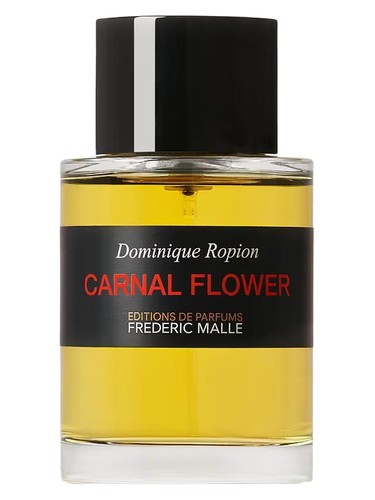
Frederic Malle Editions de Parfums
Carnal Flower
Seu armário
Entre para dizer que você tem, já testou ou quer este perfume. Suas marcações ficam privadas por padrão.
Criar conta é grátis e leva menos de um minuto.
Acordes dominantes
- amadeirado
- coco
- cânfora
- floral branco
- doce
- almiscarado
Pirâmide olfativa
Coração
A personalidade do perfume, por algumas horas.
Fundo
O rastro que fica na pele até o fim do dia.
Como ele se comporta
Fixação, projeção e ocasião — votos da comunidade internacional somados aos daqui.
Gênero
88 votos
Quando usar
- Inverno: 20 votos
- Primavera: 81 votos
- Verão: 68 votos
- Outono: 38 votos
- Dia: 78 votos
- Noite: 59 votos
Do nosso caderno
Carnal Flower é um floral branco denso e ao mesmo tempo luminoso, criado por Dominique Ropion para a linha Editions de Parfums. A tuberosa é o fio condutor, envolta em coco e notas verdes de eucalipto que trazem frescor sem aliviar sua intensidade. Na base, almíscar e nuances animais dão um toque profundo e levemente terroso, enquanto o âmbar acrescenta calor. É uma fragrância unissex e ousada, que se revela aos poucos e pede pele, não roupa.
Onde encontrar
Nenhum decant à venda nem vaquinha aberta agora. Marque Quero ali em cima — é o interesse da comunidade que puxa a próxima vaquinha.
Ver vaquinhas abertasQuem gosta deste também gosta
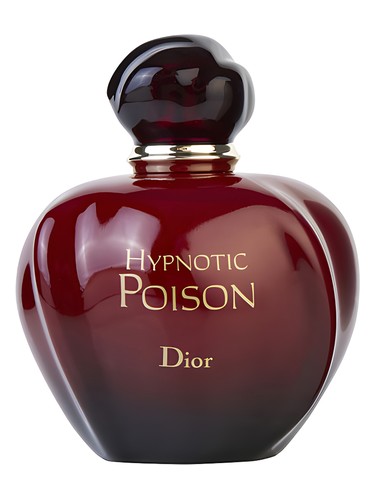
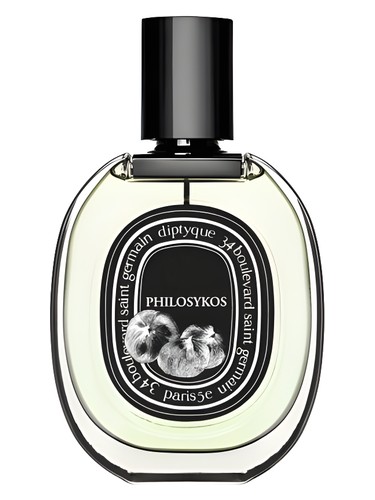
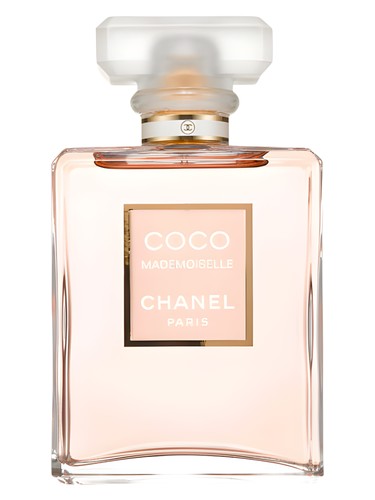
Perfumes próximos no gosto de quem curte este — bons candidatos para o próximo decant.
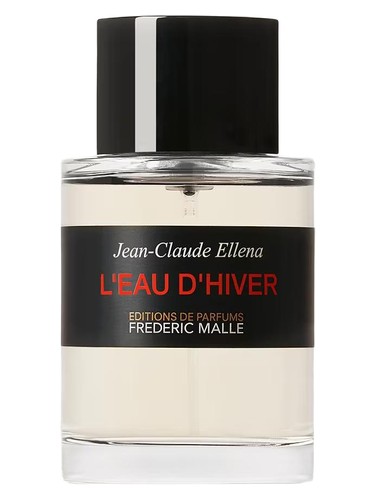

Impressões da comunidade internacional
Traduções chegam aos poucos — textos em inglês por enquanto.
- em inglês
No perfume proclaims "nature" as loudly as Carnal Flower. And in no perfume is that nature so completely the product of artifice, from first molecule to last. The official story is simple. Ropion worked on the formula for two years (eighteen months, by some accounts), and the result—so Malle states—contains the highest concentration of natural tuberose absolute in the industry. The concentration claim is Malle's own assertion, not an independently verified fact; the secondary literature passes it along with hedges—"according to the brand," "reportedly"—for precisely that reason. But suppose the claim is literally true. The conclusion that follows is, most likely, the exact opposite of what most enthusiasts imagine. Tuberose absolute is not the living flower. The blossoms are too heat-fragile to survive steam distillation; the material was obtained historically by enfleurage and today by volatile-solvent extraction, by way of a concrete. The process does not preserve the flower's scent. It transforms it, concentrates it, remakes it into a different substance. The headspace of a living tuberose and the smell of the absolute in the bottle are not the same thing. And the absolute on its own—as we will see—is heavy, indolic, prone to tip toward the funeral wreath on one side or the saturation of butter on the other. "The most absolute," in other words, does not mean "the most alive." Rather the reverse: pile up the raw absolute and the scent moves away from life. Ropion's own testimony confirms the paradox. The difficulty of making this perfume, he has said, lay less in accentuating any one of the flower's qualities than in cloaking its unpleasant aspects (The Fandomentals, reporting Ropion's own account). This is the decisive sentence. The achievement of Carnal Flower does not consist in entrusting eloquence to a rare natural material. It consists in organizing the material, covering it, positioning it—and above all, in making it appear alive. A single flower breathing, dew-laden, in a garden at dusk: that impression is exactly what the natural absolute alone can never produce, and exactly what Ropion built. The core of that construction is the handling of one facet intrinsic to the material: a camphoraceous, medicinal, cold green nuance. Tuberose absolute contains, among its documented constituents, methyl salicylate—the wintergreen ester that lends a medicinal-green cast—and out of that ensemble rises a cool, camphor-mentholated facet. The precise molecular origin of what gets described as "camphoraceous" cannot be pinned down without a disclosed formula and a GC/MS of the specific lot; I treat it here as a facet whose existence is phenomenally certain and leave the molecular attribution open. What matters is that this facet has been handled three times in perfume history, in three entirely different ways. The first operation is concealment. Cellier's Fracas (1948) sinks the tuberose into a saturation of orange blossom and a creamy base, rounds off the camphor's edges, and smooths everything into a buttered white bouquet. The cold green blade is hidden beneath warm milkfat. The second operation is quarantine. Sheldrake's Tubéreuse Criminelle (Lutens, 1999) does the exact opposite. It opens by detonating the facet—mentholated, rubbery, verging on gasoline, a medicinal shock in which an excess of camphor of the 1,8-cineole (eucalyptol) type is plausibly at work—and then resolves into a creamy, honeyed tuberose heart. The camphor is staged as a "criminal" overture, isolated on the time axis, and abandoned. Exposed, then quarantined. And the third operation, Carnal Flower's, is integration. Ropion doubled the facet the flower already latently possesses with an external eucalyptus—that is, with 1,8-cineole. The eucalyptus sometimes appears in the official pyramid and is sometimes described as an unlisted note; either way, the perfumer himself has acknowledged its presence. The cineole's cold green does not detonate as an overture and vanish; it runs continuously alongside the flower. As one reviewer accurately observed, the camphor here is soft—it tempers the flower's weight without ever drawing attention to itself. The result is that this coldness reads not as a medicinal accident but as the chill of a living plant—as its breath. Conceal, quarantine, integrate: three attitudes toward one and the same facet, all now on the table. The genealogy Fracas / Tubéreuse Criminelle / Carnal Flower is, in itself, a commonplace of perfume criticism. More than one writer has positioned Carnal Flower as the perfume that declines both the butter saturation of Fracas and the collision of hostility and delicacy in Tubéreuse Criminelle, and goes its own way. What can be added is to reorganize the three terms at the molecular level—as three operations on the camphoraceous facet—and to set this third operation beside its structural twin in another genre entirely: Chanel's Sycomore. In Sycomore, the dry smoke at the center of the vetiver was never extracted from vetiver. Haitian vetiver is a low-smoke material (the provenance rests on The Perfume Shrine and other secondary sources), and the smoke was read into it—by cypress terpenes, juniper pinenes, and very likely a trace guaiacol-class adjunct. A property the material did not possess was made to appear by structure. Carnal Flower's operation is its floral counterpart. But it differs decisively, on two points. First: Sycomore inscribed a property the material lacks (smoke), whereas Carnal Flower redeems a property the material has but that tradition treated as a defect (camphor). The inscription of an absent property; the redemption of a latent one. Second—and this is the deeper difference—smoke is an odor; life is an inference. Smoke, a perceptual quality, can be approximated by a small, focused set of materials such as the guaiacol class. But the impression of being alive is not itself a smell. It is a gestalt conclusion drawn from multiple cues, and it cannot be built by any single material—only induced by an ensemble. And the two differences name one operation, not two. The camphor of the first—heard by tradition as a defect—is itself among the cues of the second: foregrounded instead of buttered into sweetness, its coolness reads as the flower's respiration rather than its embalming, and so becomes a term in the very ensemble from which life is inferred. Both works construct a facet through external materials, yet what each constructs belongs to a different order. Twins in operation, sisters in what that operation makes. And the value of the comparison lies not in identification but in discrimination. That ensemble must be specified. The integration of the camphoraceous facet is the operation that distinguishes Carnal Flower within its genealogy—the choice that makes it neither Fracas nor Tubéreuse Criminelle—but it does not, alone, produce the impression of life. Since life is an inference, it cannot, in principle. The melon's watery green supplies the dew. The cineole supplies the cold breath. The salicylate esters and the coconut's milkfat supply the petal's warmth as it sits on skin. And the dosage of white musk holds the whole aloft, full of air, instead of letting it sink into heaviness. The impression of life rises from the mutual equilibrium of these elements—an achievement of the ensemble, not the credit of any single material. The camphor treatment is the genealogical signature; life is the consequence of the ensemble. The single distinguishing operation and the plurally necessary constituents must not be confused. It is no coincidence, moreover, that the engineer of the facet is in both cases Ropion. In his Vétiver Extraordinaire, Ropion wrapped vetiver's glandular facet in cashmeran and a woody-musk envelope. In Carnal Flower he doubles tuberose's camphor with eucalyptus. To wrap; to double—he is, consistently, an engineer of facets: not a perfumer who lets the material speak, but one who designs which face of the material will be treated, with which material, and how. Carnal Flower demands an account of flesh. Yet the flesh it presents is not the flesh usually associated with tuberose. The descendants of Fracas tend toward warmth, animality, and the saturation of perfume as body. Carnal Flower takes another path. Its flesh is vegetal. A taut white petal, cool to the fingertip. A stem weeping green sap at its cut. Dew. The cold breath a flower exhales at dusk. The cold green here is not the opposite of the carnal. It is the form the carnal takes when flesh is not animal and warm but vegetal and alive. The chill of cineole—together with the dew the melon's watery green sets on the petal—is the smell of the fact that this flower is still alive. And immediately beside that life stands the shadow of death. Tuberose has long been a funeral flower and a forbidden one—in some cultures, it is said, young women were not permitted to breathe its narcotic scent after sunset. The narcosis comes from indole (boiling point around 254°C—the molecule of white flowers, and of decay), shared with jasmine and orange blossom. Tuberose stands, always, on the threshold between life and death. The other half of Carnal Flower's achievement is to have held the flower's flesh on the living side of that threshold. The cold green does not merely naturalize the camphor. It keeps the dew-laden petal from becoming the dead one. The cold is the life. Leave the raw absolute to itself and the flesh thickens, the indole wins, the flower tips toward death. Ropion's green is the structural force that resists the tipping. Luca Turin, in The Guide, awarded this perfume five stars and called it a "high-voltage tuberose." The observation is exact—the flower does detonate with an overwhelming energy of life. But what deserves attention is the grammar of the shorthand. The noun "tuberose" assigns the source of the voltage to the flower—to nature. In fact the voltage is not the flower's. What makes an absolute inclined toward the heavy and the funereal read instead as alive and high-voltage is the engineering of the ensemble dissected above. This is not Turin's error. The vocabulary of the genre itself is built to route the credit for construction back to the material; even the shorthand of the most chemically literate critic in the field files this perfume under "flower"—and that fact is the best available measure of the illusion's completeness. No one has been deceived. The vocabulary is simply working on the illusion's side. Ropion's achievement is to have erased the artifice so completely that even the language of criticism returns it to nature. Thus Carnal Flower joins a line of perfumes that turn on a single principle: the distance between what a perfume claims and what it is made of. Shadid constructed animality without animals. Sycomore read smoke into vetiver. And Carnal Flower constructs nature itself out of artifice. The claim the grand floral makes—"the real flower," opulence, nature—is the purest case of the gap between claim and substance, because here the claim is, literally, nature itself. And when that gap is measured, what appears is the fact that the greatest quantity of artifice is at work in the least visible way. Can this method migrate to the grand floral? The answer is here. It can—not despite the floral, but because the "nature" a floral promises is exactly the species of claim the method exists to measure. And yet one reservation remains. The genius of this perfume is concentrated in the architecture of the living illusion—its summit lies in the opening and the first hour. The cues of life are loaded toward the front of the volatility curve. Cineole, the melon's watery green, bergamot: the very materials that keep the flower alive are the first to leave. As they disperse, the construction necessarily slackens, resolving into a base of white musks, milky salicylates and coconut, and a settling, indolic flower. It is beautiful. But what is happening here is not the victory of nature. The materials make that plain: the white musks that persist longest on skin are the most synthetic substances in the perfume. What exits is not artifice but singularity. A singular construction slackens into the most standard construction in the genre—the white-musk resolution. The illusion expires. One reading can be appended here: since the cues of life are front-loaded in volatility, the perfume enacts, along its own time axis, the threshold of life and death described above—for an hour the flower lives, then it crosses, and becomes a beautifully preserved flower. But that interpretation cannot redeem the point. The perceptual fact that what sits on the skin in the third hour is an excellent but conventional white-floral musk is not altered by interpretation. The most astonishing construction softens into the most customary drydown—and the deduction is charged against that fact. The living tuberose of Carnal Flower never bloomed in any garden at dusk. It was assembled on a perfumer's bench, according to a principle that Carnal Flower demonstrates with unusual clarity: that the one thing a natural absolute cannot supply is the impression of the living flower. Nature, here, is the most demanding of fictions. 9/10
- em inglês
Carnal Flower by Frédéric Malle is a sophisticated and captivating fragrance that takes the art of floral perfumery to an entirely new level. Created by renowned perfumer Dominique Ropion, it showcases the power of tuberose in a way that is both seductive and elegant. This fragrance is a bold exploration of the intoxicating allure of flowers, enveloping the wearer in a bouquet that is rich, creamy, and undeniably sensual. From the very first spritz, Carnal Flower captures attention with its striking opening notes of tuberose, jasmine, and citrus. The tuberose is the star of this composition, but it's not the heady, overpowering variety that one might expect. Instead, it is delicate yet bold, with a creamy texture that invites you in. The jasmine adds a touch of sweetness, while the citrus notes provide a refreshing contrast that balances the richness of the florals. As the fragrance develops, the heart reveals even more of the creamy, almost lactonic quality of the tuberose. It is lush and full-bodied, with an intriguing green undertone that makes the fragrance feel alive and vibrant. The addition of frangipani and a subtle hint of neroli further enhances the freshness, while the underlying richness continues to emerge. The base of Carnal Flower introduces a soft, woody aspect with notes of musk, sandalwood, and orange blossom, which add depth and warmth to the composition. This smooth base grounds the fragrance, creating a perfect contrast to the vibrant floral heart and ensuring that the fragrance lasts long into the day or evening. Carnal Flower is a luxurious and complex fragrance that is as seductive as it is sophisticated. It’s perfect for those who love florals, but want something that transcends the typical floral bouquet. It’s a fragrance that lingers on the skin with a remarkable sillage and impressive longevity, making it a captivating signature scent for those special occasions or for everyday wear when you want to make a statement. This fragrance is not for the faint-hearted—its presence is bold, striking, and impossible to ignore. It’s an unforgettable expression of the beauty and sensuality of flowers, with the tuberose standing as the ultimate symbol of femininity and allure.
- em inglês
This is the greatest perfume ever created. The fact that it has only a 4.25 rating is criminal. This work of art is so addicting I will never be without Carnal Flower. Nothing shrill or harsh or synthetic about it. In the supermarket, men follow me around when I wear this. Men who are acquaintances will get especially close, they will violate the unspoken social bubble to smell the beauty of this scent and women I notice love it too. Bees adore it also, so the pollinators will appreciate you too. Carnal Flower smells like creamy tuberose, a real and sublime flower but it has a wildness about it because the creaminess is met with the stems and leaves so lifelike it is like you've rubbed the green into your hands and rammed your knees in the grass. The creaminess is cut with the freshness of eucalyptus and this green, ozonic quality that feels like paradise, an innocent passion that is neither dirty nor sloppy. Very well rounded. Words to describe it: sexy, earthy, fresh, creamy, soft but powerful at the same time, like Mother Nature. This is a scent for a dreamy person, a quiet introvert who is very fine. I feel a loud, boisterous person or someone who is very practical would not do well with it because it would be too much and the mystery and passion would be missed. If you are the type of person that is inspired by the curves of a panther or the sound of the wind in the trees you would love this. It is so transporting that it conjures up a tropical rainforest full of flowers, but this forest is grand, silent, misty, cool and dark. You enter it as an outsider (it is very distant at first) and then it engulfs you so deeply. As it engulfs it creates heat, with a possession you can never really know even in the midst of it so you keep smelling and smelling trying to rationalize it but it is too beautiful to express. It is the first fragrance that made me think the essence of the tuberose flower could come alive. An experience that moves and transforms you. It is just so lovely!
- em inglês
It arrived, this bottle of Carnal Flower, and I must confess, it is not so much a singular creation as a phantom of three other scents that already reside, quite comfortably, on my dressing table. First, and one must be firm about this, it is nearly a twin to Diptyque’s Do Son. For the first hour, indeed for the first several, one is left in a state of perfumed suspense, the wrist raised in a silent query: Am I wearing Do Son, or is this the celebrated Carnal Flower? It is the same creature, that particular breed of green and woody tuberose, with that chilling, almost medicinal, mentholated breath. Then, a secondary specter emerges, and one is surprised, truly surprised, it is not listed among its kin. It is Dior’s Pure Poison. Of course, the connection is so terribly obvious; both are the work of that master, Dominique Ropion. To press one’s nose directly to the skin, to the very spot where the elixir was bestowed, is to be privy to his signature. Here, the flower reveals its secret self: nutty, fleshy, those waxy white petals like something just cut from the stem. It is a seamless construction, this Ropion magic. There are no sharp edges, no vulgar interruptions; merely a smooth, unbroken continuum of scent. And the final curtain, the last memory it leaves upon the air, is one of creamy indolence. It drifts, then, into the languid, sun-warmed territory of Tom Ford’s Eau de Soleil Blanc. A slight, coconutty creaminess, a vestige of tropics. A fitting, if predictable, alliance, when one considers that both Malle and Ford ultimately answer to the same grande dame, Estée Lauder herself. It is all, my dear, in the family.
- em inglês
i think this is better than portrait of a lady (don’t hate me). Carnal Flower (CF) is a masterpiece in every sense of the word. very distinct/unique and complex eucalyptus/ frangipani & white floral fragrance — is actually deserving of the title when people say “omg you smell divine”. if ur a fan of gucci bloom/penhaligon's lily of the valley for their white floral accuracy, or conversely if you love frankincense or myrrh, you will literally die over this.. if i haven't worn it in a few days ill hold the bottle to my nose & it actually makes me weak in the knees (complimentary). amazing & potent sillage and longevity, and nuances in the fragrance are drawn out in heat. CF is not something for a shy person to wear, it is “loud” but in a non offensive way. like i imagine Aphrodite/Athena/Persephone would smell like this. IMO the melon, bergamot and coconut are closer to accents or decorative*? notes, they aren’t prominent to me but make do themselves apparent if you focus lol.. the jasmine, animal notes & musk make stronger appearances. i’ve had (and agree with) multiple people tell me they get a (highly appealing) strong photorealistic frangipani from CF, despite not being a listed note. i think it could be up to peoples individual interpretation of the camphor/musk notes. i also find it (meaning over the course of a day after spraying, not the whole bottle) can develop a ‘low’ or very light (not sharp) minty aroma that sometimes appears & sometimes doesn’t. again, full fledged masterpiece. i’ve already committed at 23 to keep buying this for the rest of my life.
Resenhas da comunidade
0 comentáriosEntre na sua conta para comentar e resenhar.
EntrarAinda ninguém resenhou este perfume
Seja a primeira pessoa a contar como ele se comporta na pele: projeção, fixação e a ocasião certa.
Encontrou um erro ou falta informação? A comunidade melhora o catálogo junto.