Grossmith
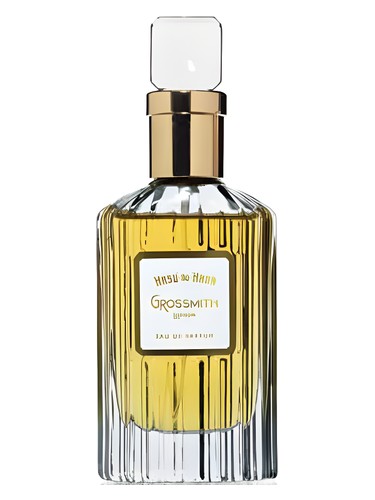
Hasu-no-Hana
Seu armário
Entre para dizer que você tem, já testou ou quer este perfume. Suas marcações ficam privadas por padrão.
Criar conta é grátis e leva menos de um minuto.
Acordes dominantes
- amadeirado
- terroso
- cítrico
- musgoso
- aromático
- floral amarelo
Pirâmide olfativa
Saída
O primeiro impacto, nos primeiros 15 minutos.
Coração
A personalidade do perfume, por algumas horas.
Fundo
O rastro que fica na pele até o fim do dia.
Como ele se comporta
Fixação, projeção e ocasião — votos da comunidade internacional somados aos daqui.
Gênero
10 votos
Quando usar
- Inverno: 6 votos
- Primavera: 5 votos
- Verão: 3 votos
- Outono: 6 votos
- Dia: 5 votos
- Noite: 5 votos
Onde encontrar
Nenhum decant à venda nem vaquinha aberta agora. Marque Quero ali em cima — é o interesse da comunidade que puxa a próxima vaquinha.
Ver vaquinhas abertasQuem gosta deste também gosta
Perfumes próximos no gosto de quem curte este — bons candidatos para o próximo decant.
Impressões da comunidade internacional
Traduções chegam aos poucos — textos em inglês por enquanto.
- em inglês
A transcendent mystery to me. This is a very complex, very feminine, very floral, very old-fashioned chypre reeking of the late Victorian-early Edwardian era. All qualities I usually dislike. Absolutely evokes images of great big bun-like hairstyles and auburn tresses and yards and yards of impractical white tulle sewn into giant stuffy dresses. It's not a period I admire much in aesthetic terms. And in perfume terms all of this is miles and miles from the things I usually love. And yet... THIS IS MAGIC. Insanely seductive. Maybe like some of those swathed-up women in Whistler portraits or paintings by Sorolla ... or perhaps more accurately like some of Aubrey Beardsley's Art Nouveau femmes fatales ... it is indeed intensely feminine in an almost historic way, but there is strength and sex appeal and timeless beauty there too. Despite the retro aura and the high-class tone (not to mention the ruling-class price), it's not 'ladylike', but womanly instead. And it's not just a period costume drama - it's real enough to take you into a living garden. Pictures of Monet's Irises or waterlilies float through my mind. The pungency of oak moss and vetiver give it an earthy, lusty throb underneath all the frills and flounces of ultra-feminine rose and ylang and jasmine. There's just so much going on - but it never feels too much. It's as incredibly rich and nuanced and almost dominant as a scent like Zoologist Nightingale, though this one's historic while Nightingale is bolder and more modern. Hasu No Hana is so beautiful that it leaves me breathless, but somehow not smothered. For me I think maybe the secret's in the bitter orange, making it brighter and zingier than most historic chypres, while leaving out the animalics which tend to go a little bitter or sweaty on me. Its oakmoss underlayer is very punchy indeed. Yet despite all its chypre-ish-ness and its bossy projection it never cloys, either. Honestly something of a miracle and a genuine masterpiece. I can see why they've been making it since 1888 and hope they'll still be making it in 2088 and 2188 and beyond for it deserves to survive for all the ages. Has astonishing longevity on me (8-12h on skin, and many, many days on fabric, so beware, or be prepared, for it to last if you get it on your clothes ) and is multi-faceted and utterly individual right to the last. Didn't notice any drastic changes in phase or character; it just ebbs away, leaving me wanting more and more and more. Completely blew my mind. It's not my sort of thing at all. I'm kind of obsessed with it. What strange magic is this? Hardly dare to recommend anyone try it in case it has the same effect on them. But on the other hand I'd like everyone in the world to smell this just to see what a perfume can be. Painfully dear and not easy to source. It haunts me.
- em inglês
Hasu-no-Hana is a high-quality floral chypre, complemented by amber facets, classical in style and radiantly beautiful. I first came across Grossmith on a BBC documentary about perfume, where it featured the efforts to revive this old British perfume house dating from the 19th century. A descendant of the original Grossmith family stumbled upon the original handwritten formulas, and wanted to relaunch these historic perfumes while remaining as true to their original formulations as possible. I was very curious to try these, so I bought small decants. I love a good chypre, and this is an excellent example, utterly timeless and reminiscent of the greats. It is expensive, but given the quality of the ingredients and the beauty of the composition, it is arguably worth it. It reminds me in parts of chypres like Frédéric Malle Le Parfum de Thérèse or Rochas Femme, and there is a spicy amber accord that is reminiscent of vintage Opium, thanks also to the sandalwood. There is a slight Guerlinade quality to it as well, sans vanilla, just adding to the complexity of this perfume while being a nod to another legendary heritage house. HNH opens with a squeeze of fresh citrus, followed closely by the rich, sweet floral heart, led by ylang ylang. Vintage-style oakmoss follows, adding a delicious mossiness that imbues this scent with a chypre base from its early stages. The florals become powdery as they develop, mostly thanks to the iris initially, followed seamlessly by a big, powdery rose note. Clean white florals - mostly jasmine and some waxy lily - round it out, keeping it sweet yet rich and wonderfully powdery. Tonka bean complements the tail end of the bouquet, bringing the Guerlinade vibe to life, and adding quiet, hazy spiciness. It becomes increasingly woody as it dries down, with mostly sandalwood coming to the fore. Patchouli, that essential component of modern chypres, enhances the mossiness of the oakmoss with its distinctive earthiness. The amber slowly emerges from the background here, complementing the woody chypre notes to perfection, in a similar way to MDCI Chypre Palatin. It becomes slightly musky as it fades, with tonka bean lingering, adding smoothness. It fades to a musky, mossy skin scent. Sillage is fairly strong and longevity is long-lasting. Rich and baroque, HNH is a timeless beauty, made in the classical tradition. It feels French in style, despite its British heritage. Opulent, old-school elegance in a bottle, it is feminine in a classic sense, but unisex by modern standards, as is the way with mossy chypres. I love a perfume with history and a story, and this certainly applies to Grossmith. A bit expensive, but everything about it is excellent. 5/5.
- em inglês
Wearing something like Hasu-no-Hana may require a specific optics that to many may be impossible to commit. What we are presented with is as close to the original, age-old formula as Robertet perfumer Richard Melchio could achieve given modern constraints—and it is impressive. So impressive that my impression is that it is a portal to the times evoked by the imagery of Middlemarch or the Trumpet-Major. The colors are refracted through the looking-glass of an age no one alive on Earth today can recollect. Therefore, experiencing Hasu-no-Hana (Japanese for "lotus flower") may be perceived by the practical perfume wearer as a period piece deemed inappropriate for anything but the most formal occasions (do these occasions even exist today?). Many who actually commit to reading my thoughts are thankfully not the most practical perfume wearers. I salute you all, as we are part of a subculture that can romanticize, fantasize, and conceptualize while wearing scent. Therefore, Hasu-no-Hana may be riveting by design. The sparkling bergamot and bitter orange that first greets my nose is already underlined by an ensemble of florals and the patina of oakmoss. The bouquet is naturally opaque, an assemblage of white and yellow florals, traced with a rosiness. Having smelled pink and blue lotus flowers, I can confidently say that this is a more poetic interpretation of the flower, rather than a resemblance of their aroma. It feels subtly sweetened by an almost praline-like quality. I could theorize that it's orris and tonka together that imparts this effect. Further in, there is a carrot-seed like facet, followed by a warm, earthy sensation, followed by the type of fuzzy-woody cedar-meets-question-mark characteristic that likely could only be experienced through the reconstruction of a nearly 140-year old composition. It dries into something so crepuscular, bewitching—alien even. This suggests the temporal shifts in beauty's convention: the initial impression of old world opulence winds down to a haunting dissolution. Fragmented attention won't work for this wearing experience: apply it, take a long walk, resist the urge to look at your device, or alternately, crack open a book, whether from the time period or not, extract the passages from what you smell and you lose yourself in the imagery of what you read.
- em inglês
I’ve long wanted to experience this, yet finding Grossmith here in Australia has always been a challenge. Sometimes though it feels right to let nature take its course and allow beauty to find you. My only regret is having discovered Hasu-no-Hana so late, I have less time left to share in its magic. I couldn’t hope to do it justice with my words, so I’ll spare you a full note-by-note analysis. What I will say is that this is undeniably a classic piece of perfumery, yet it somehow transcends the traditional structure of the genre as it moves through its stages. The opening is as you would expect, but beneath the classic brightness of bergamot there’s an almost medicinal undertone which gracefully yields revealing an indolic depth as it unfurls. Where typically you might encounter the mossy astringency of oakmoss in the base, here that character emerges mid-development, intertwined with clean, delicate florals. The result is a beautifully elongated dry-down, rich with a smooth, creamy sweetness that I can only gather result from the harmonious interplay of patchouli and sandalwood at its base. To me, this is more than a fragrance. It’s a living testament to perfumery’s heritage, a composition both timeless and daring, rewarding those who choose to keep this art alive. Discovering it so late is bittersweet, yet every moment with it now feels like a gift.
- em inglês
Hasu-no-Hana was originally created in 1888, representing the scent of the Japanese Lotus Lily. It is a glorious gentle floral resting on a dry, Chypre style base. A true classic in the world of perfumery, created in a time long before corporate greed and profit-driven creativity. It opens rather fresh initially, bright and zingy notes of bergamot and orange pave the way towards the clean, innocent florals which include: ylang, Iris, rose, lotus and jasmine. This gentle and soapy harmony of beautifully delicate flowers is complimented yet rooted down by the grounding and earthy nature of oakmoss, Vetiver, patchouli and cedar. This contrast is to die for, smelling both mature and sophisticated as it is intriguing and beguiling. I adore this scent, it’s everything I hoped it would be and more. The structure is fairly simplistic, and of course I have no idea how closely the house has stuck to the original composition, but it certainly smells of the time without smelling ‘elderly’. I definitely need to pick this up soon.
Resenhas da comunidade
0 comentáriosEntre na sua conta para comentar e resenhar.
EntrarAinda ninguém resenhou este perfume
Seja a primeira pessoa a contar como ele se comporta na pele: projeção, fixação e a ocasião certa.
Encontrou um erro ou falta informação? A comunidade melhora o catálogo junto.