Guerlain
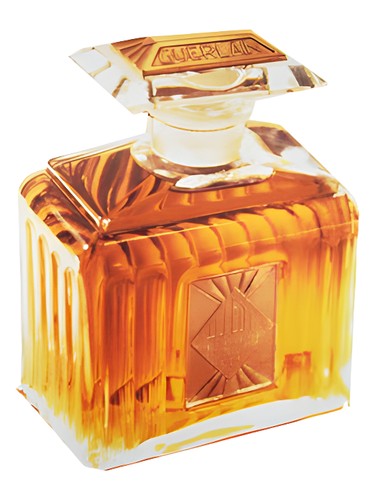
Djedi
Seu armário
Entre para dizer que você tem, já testou ou quer este perfume. Suas marcações ficam privadas por padrão.
Criar conta é grátis e leva menos de um minuto.
Acordes dominantes
- almiscarado
- terroso
- animálico
- amadeirado
- musgoso
- couro
Pirâmide olfativa
Como ele se comporta
Fixação, projeção e ocasião — votos da comunidade internacional somados aos daqui.
Gênero
1 votos
Quando usar
- Inverno: 1 voto
- Primavera: 0 votos
- Verão: 0 votos
- Outono: 1 voto
- Dia: 0 votos
- Noite: 1 voto
Onde encontrar
Nenhum decant à venda nem vaquinha aberta agora. Marque Quero ali em cima — é o interesse da comunidade que puxa a próxima vaquinha.
Ver vaquinhas abertasQuem gosta deste também gosta
Perfumes próximos no gosto de quem curte este — bons candidatos para o próximo decant.
Impressões da comunidade internacional
Traduções chegam aos poucos — textos em inglês por enquanto.
- em inglês
Having just come back from Paris after a fabulous weekend of pure olfactive indulgence; the highlight of which was the workshop at Guerlain HQ to sniff 32 discontinued masterpieces spanning from the beginning starting with Pois Des Senteur 1840 ending with Parure 1975. How five hours flew by I couldn't recollect but seemed like it was only two hours :-D Whilst trying out these thirtytwo masterpieces I was privileged enough to try the legendary Djedi! The composition I tried was however a reconstruction by Thierry Wasser and dated 2014 and according to Guerlain contained the following ingredients which is also reflective of the what was in the original 1926 version. Aldehydes, muguet, bergamot,Jasmine, rose, Iris Vetiver, animalics, musk, Amber, oakmoss I've waited with baited breath for this moment for the last five years and when it came I was not dissapointed! When the strip with the scent was handed to me by the lovely Françoise I quickly applied it on my skin before the alcohol dried.......It was what I expected and more! From the very start to the very end I've got to say this composition was totally austere and sombre. If a dictator were to wear a fragrance this would be it! I literally felt like Napoleon! It starts of with sharp aldehydes and clean muguet florals with spikes of sharp animalics and dryness poking through. It's an amazing juxtaposition between cleanliness and decaying filth and totally avant garde for the period when it was released. Even for today's standards this would be considered strange but I love it with my whole being! Once this sharpness subsides one is left with a fuzzy warm Amber cushioned on a foundation of super dry oakmoss and civet .......the whole composition is still veiled with a light ethereal mix of muguet, Jasmine and rose. After 8-9 hours everything is a whisper but the telltale signature of oakmoss and other acrid dusty components could be felt for another ten hours. For the first eight hours this was a sillage bomb and the little spot that I applied could be smelt from an arms length however understandably so becomes a skin scent which lasts a very long time. I forgot to add although Vero's Onda is absolutely amazing and one of my favourites, to me it bears no resemblance to the Djedi I smelt at Guerlain HQ. It's just totally unique
- em inglês
Djedi has long since accrued a kind of legendary status as one of Perfume History's lost masterpieces, and smelling it from my (likely 1997 rerelease) 0.5ml vial, it is completely deserved. Rare is the occasion when perfection of a perfume genre occurs so early in that genre's history, but given it's Jacques Guerlain, is it so surprising that this is likely the greatest of all leather chypres to have ever been made? Djedi, for its part, is somewhat monotonous and lacks the pyramidal structure of many old classics - I find I can smell all its essential components immediately when I apply it, though I use it in incredibly small quantities and I assume it could give a different experience if (somehow) worn with abandon. Its core is composed of animalics, leather, vetiver and oakmoss, but balanced in a very beautiful way, giving a forest floor + leather effect. It is the quintessence of the comfort of the scent that can be found in old things, from the polished wood of a church pew to a beaten-up leather glove, or even a set of ivy-clad ruins in an ancient moorland. It is somehow evocative of stone, to my mind more a Mediaeval castle than anything Egyptian, with a softly smouldering fire in the corner and a heap of animal furs warming the bed in the cold, dark and damp room. Austere though it sounds, Djedi compensates for its dryness with a VERY well-judged dose of cinnamon and possibly also vanilla, which gives just the faintest impression of warmth and sweetness to this otherwise blisteringly cold-dry core. Therein lies the totality of its beauty, as the base notes create this enormous litho-crypt in which the tiniest dose of sweetened spice smoulders, not unlike the structure of an atom with its miniscule nucleus and far-flung electron orbitals (or, as perhaps was intended, a kind soul gently haunting a hypogeal tomb). Though gorgeous, Djedi's ongoing disappearance into the mists of time does not upset me too much, as in Vero Profumo's Onda (VdE or extrait) or Sultan Pasha's Thebes extrait we have two extant perfumes that cleave very close indeed. Djedi may have passed on, but her beautiful children still inhabit the world.
- em inglês
This perfume was created in the 1920s and reissued for a brief time in 1996. What I have is a tiny sample of the original 1926 version. The opening is strongly animalic and musty with just enough residue of spicy and floral top notes to keep it from being fecal-smelling. There’s real civet in enormous quantity, there’s earthy, dusty vetiver, and there’s just the slightest hint of cinnamon and spices. If I’m not mistaken, the note that so many people smell and comment on as odd, unfamiliar, mineral, death-like, dry, sinister and the like is an unusually fine calamus, which would be perfectly in keeping with the Egyptian theme. Combine it with real, high-quality orris root, and you have the genie in the tomb. I would not want to debunk anyone else’s magical and spiritual experience by overthinking, but I suspect that the strange and other-worldly opening of vintage Djedi is due to the fact that it’s so old that it’s lost most of its top notes and what we smell initially is a premature and unintended peek at the base. Whether intended or not, it certainly works its magic. About an hour into the drydown, the sweeter, slightly powdery, slightly spicy, floral chypre notes start to appear. There are dried roses, iris, a touch of real sandalwood (foreshadowing Samsara), a touch of patchouli, a touch of real oakmoss, and, of course, the powerful vetiver-calamus-civet base underlying it all. I can see how people perceive Djedi as containing leather, since there’s the right combination of powdery and animalic notes to produce the illusion of leather if you’re looking for it. A reviewer on Basenotes observed that most people describe Djedi in terms of an experience, not a fragrance, and I would concur that it is highly evocative of the unknown. Although a very different scent, my experience of Djedi was in some ways similar to that evoked by Judith Muller’s Bat-Sheba, another vintage perfume that seemed to have lost its top notes and produced the impression of a tomb-like environment or archaeological dig. If you ever get a chance to try Djedi, do so!
- em inglês
Djedi review, part two: Who Djedi Is Djedi was born in a different time, daughter of a different way of life. She is part of a generation putting itself together in the aftermath of total war, a lost generation of men, and women who rejected the Victorian conventions of dress and morality that had stunted their lives and their social and physical freedoms. These women cut off their hair. Bobby pin factories went bankrupt overnight! They wore short, loose dresses and cloche hats. They drank and smoked in public and they demanded and mostly received the right to vote. They took their places in institutions of higher learning. They stopped wanting to smell like flowers. How could any soliflore express who these women were? 1919, Tabac Blond. 1921, Chanel #5. 1924, My Sin. And 1927, Djedi. Djedi is thrilling and powerful and so strange, something new under the sun that was inspired by something the sun had not seen in millenia: the tomb of Tutankhamun, opened in 1922; and as such, Djedi is escapism and endurance together, made for a generation of women who knew in their hearts that the fighting was not over-that it had just begun. And so they made hay while the sun shined. They marshalled their stregnth, and in cultivating their persons they fortified their souls for what was to come. If I am not mistaken, Djedi was discontinued in the 1950s, a time when people embraced the bomb, and better living through chemistry, and plastic, with all its implications. They tried so hard for normalcy and enforced it so fiercely. They kept different secrets. Djedi is courage with the stregnth to back it up, raw, determined, unbowed.
- em inglês
I consider myself incredibly lucky for having managed to get a tiny sample of this from a very dear friend who has a whole host of unicorns in his collection, this is a skanky beauty, it is what I expected and more... The leather in this is very reminiscent of what often times comes off as uncured leather as was prevalent in most 'Cuir de Russie' perfumes (I can only imagine what Guerlain's Cuir de Russie might've been like), this feels like the bodily scent of a fairly unwashed warm-blooded mammal... There is a gentle lift thanks to the vetiver in this when it opens a bit dry, earthy, but the civet and whatever is used to make the 'leather/raw hide' accord slowly take centre stage... This could in high doses be perceived as rather urinous and somewhat faecal as someone mentioned in a review. The idea for this though is sort of a tribute to Egypt, and it is a homage to embalming and also the idea of decay. If there are florals in this they're pretty hard to discern... This is 'stinky' and I love it. It is a testament to a style of perfumery that is no longer, perhaps in the world of niche fragrances, even then only a handful at best. If you use perfume to mask your natural odour, prize a certain kind of sterility or have never ripped off the clothes of your significant other, this is not for you, you will not understand this, this is primal, voiced hunger, throes of passion, forbidden secrets, animal virility and the arousing scent of your lover's intimate regions... It is what it is, and I'll end quoting Sappho, “In the crooks of your body, I find my religion”.
Resenhas da comunidade
0 comentáriosEntre na sua conta para comentar e resenhar.
EntrarAinda ninguém resenhou este perfume
Seja a primeira pessoa a contar como ele se comporta na pele: projeção, fixação e a ocasião certa.
Encontrou um erro ou falta informação? A comunidade melhora o catálogo junto.