L'Artisan Parfumeur
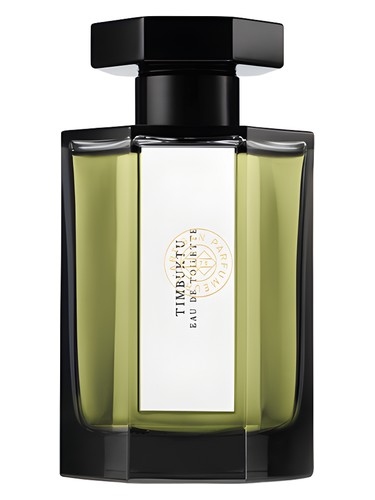
Timbuktu
Seu armário
Entre para dizer que você tem, já testou ou quer este perfume. Suas marcações ficam privadas por padrão.
Criar conta é grátis e leva menos de um minuto.
Acordes dominantes
- amadeirado
- âmbar
- especiado quente
- aromático
- balsâmico
- terroso
Pirâmide olfativa
Saída
O primeiro impacto, nos primeiros 15 minutos.
Coração
A personalidade do perfume, por algumas horas.
Como ele se comporta
Fixação, projeção e ocasião — votos da comunidade internacional somados aos daqui.
Gênero
58 votos
Quando usar
- Inverno: 36 votos
- Primavera: 46 votos
- Verão: 39 votos
- Outono: 56 votos
- Dia: 58 votos
- Noite: 35 votos
Onde encontrar
Nenhum decant à venda nem vaquinha aberta agora. Marque Quero ali em cima — é o interesse da comunidade que puxa a próxima vaquinha.
Ver vaquinhas abertasQuem gosta deste também gosta
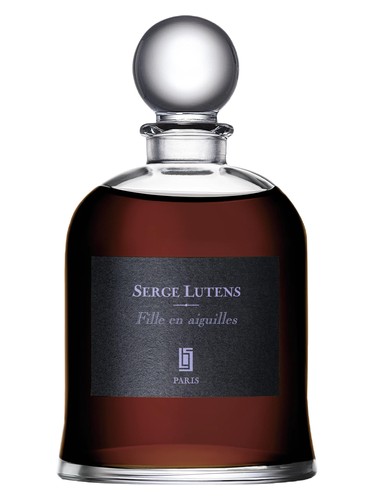
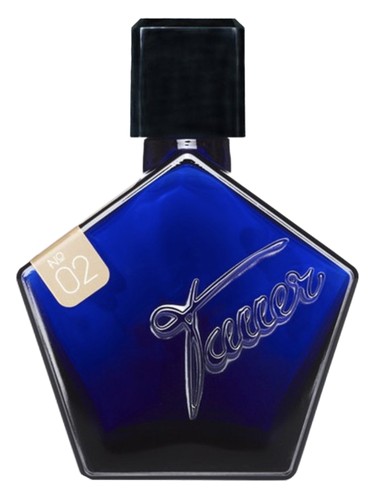
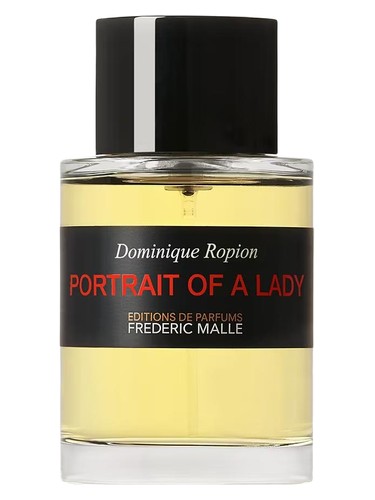
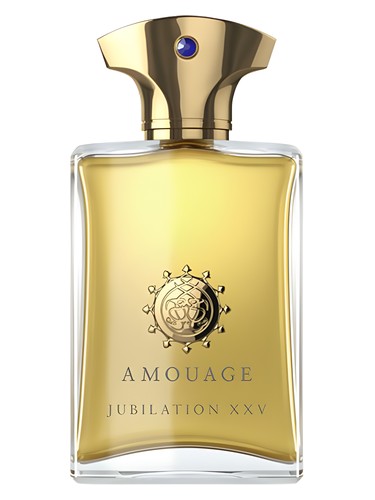
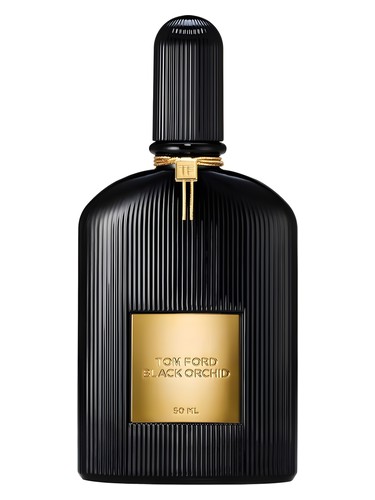
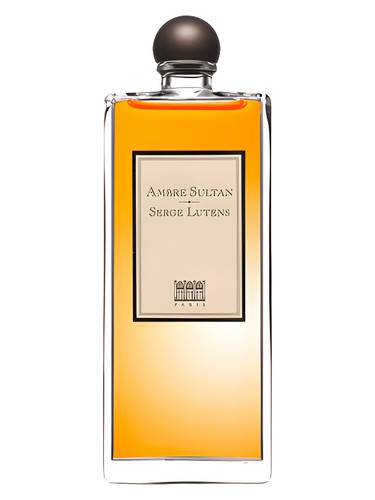
Perfumes próximos no gosto de quem curte este — bons candidatos para o próximo decant.
Impressões da comunidade internacional
Traduções chegam aos poucos — textos em inglês por enquanto.
- em inglês
Pre-2016 Timbuktu, I *love* you. I blind-bought a bottle in 2015 as a birthday gift to myself. It was an expensive gamble: at the time, I had tried several of L’Artisan’s more feminine perfumes. None of them had been quite right, but I was intrigued. There was something compelling about the way the house approached perfume, even if I hadn’t yet found a L’Artisan that worked for me. I knew I liked woods and orientals best, and despite the polarizing reviews, I paid $100 real American money dollars for a bottle of Timbuktu based on the testimony of anonymous people on the Internet. It was the most expensive perfume I’d ever bought. I didn’t love it at first. It was *weird*. Like nothing I’d ever sampled. There is something about the deep resiny base that is almost old-fashioned. Though I’d tried quite a few niche perfumes before Timbuktu, I hadn’t smelled anything quite so classic from a niche house. At first, I thought it smelled too mature, and too masculine, yet after a few wears, I could not keep myself away from it. I’ve had plenty of “signature scents” before, but pre-reformulation Timbuktu is *my* scent. This is not a perfume that I wear. This perfume *is* me. It suits me on girl days and boy days and all the days in-between. It suits me in spring, summer, fall, and winter--and smells different every season. In the spring I smell like a lioness in heat lazing on a warm rock in the savannah. In the summer, I am a priestess wandering through a mythical bazaar, reeking with incense and ancient ritual. In the fall, I smell like the smoke from fire that burns burns at night on a safari, musky with the scent of something savage lurking in dark. In the winter, Timbuktu is festive without smelling Christmas-y; it’s the smell of the incense the shepherds bring the boy king. The opening is a blast of peppercorn and resins and dry, yellow grass. It’s a little sharp, uncomfortable but not unpleasant. The best way I can describe the feeling is “dramatic tension”. It smells like opening the door to an ancient tomb. You know there is going to be something waiting in the dust and the dark, but you don’t know what. I can’t pick out the mango or the karo-karounde flowers... they don’t seem to come up on my skin. I’m not sure I would recognize karo-karounde (I don’t think I’ve smelled it elsewhere), but there really is nothing gourmand or floral about Timbuktu to my nose. The frankincense, myrrh, and papyrus smoke are the most prominent notes on my chemistry. For some reason, the peppercorns last a long time for me, 3 hours or so. I can smell the vetiver here, but it’s weird, nothing like the green or earthy-green scent I associate with vetiver. This smells like a field of vetiver that wasn’t harvested before the dry season came. It’s vetiver that has dried out in the desert sun and also the scent of the soil turning to dust beneath it. For a perfume with so many heavy notes, there is something effervescent in Timbuktu’s nature. That effervescence doesn’t “sparkle” like an aldehyde or “bubble” like champagne. Rather, it flickers like a mirage that never gets closer than the horizon or black wisps of incense smoke fading into an endless blue sky. This is the most powerful L’Artisan fragrance I’ve experienced. The pre-2016 version lasts 10 hours on my skin, though it does fade quite a bit. In hair and clothing, it will last days. Sillage is pretty big at first blast, but then the fragrance settles. It has about a radius of a couple of feet for the first 4 hours of so, then settles closer to the skin as it dries down. People will *notice* this, but not everyone will like it. Although I met my best perfume buddy when she complimented me on this. I immediately gave her a spritz on the condition that she let me smell her (it was much more ladylike on her skin!), and thus a friendship was born. She warned me that L’Artisan had changed packaging and reformulated, but her nose is much more refined than mine, so I didn’t worry too much about it at the time. Still, when my 2015 bottle began running low, I got a decant of the new bottle just to be safe. In one spray, my heart was broken--this was not Timbuktu. Post 2016-Timbuktu smells similar to the real thing, close enough that it gives me Pod Person syndrome: this calls itself Timbuktu, and it kind of resembles Timbuktu, but it doesn’t have the same walk or the same inflection in its voice. It’s an imposter. This Timbuktu is but a ghost of itself. It’s a skeleton wrapped in an ancient, tattered cloak, wandering the desert in search of its lost soul. L'Artisan Parfumeur, you murdered a masterpiece. I now know what it is like to lose a beloved fragrance to a bad reformulation: it's like mourning. I look at my bottle slowly getting lower and I know that there exists only a finite amount of the true Timbuktu left in the world. That makes this juice all the more precious, and I am putting off buying bike parts for six months to invest in a few bottles of the real thing, bottles that I will make last as long as I can. Even then, when it’s all gone and there is no more, Timbuktu will haunt my nostrils until the day I die. Damn, I am glad that I purchased a few L’Artisan scents before the mass reformulation. This reformulation is so bad that I’m not only in mourning for Timbuktu, but also for the L’Artisan fragrances I did not get to experience beforehand: Mechant Loup, Patchouli Patch, Dzing!, Dzongkha, etc. Part of me really wants to try the old formula of those too, but I'm afraid I'll get hooked on yet another dead fragrance and then have to write another 1000 word obituary for a *smell*....
- em inglês
Fragrance houses and their marketing teams are adept at conjuring perceptions of a scent by giving it a name with exotic associations. Places such as Zanzibar, Madagascar, Marrakesh, Cairo, and Babylon... all names that carry the promise of ancient mystery, excitement, and adventure. And so it is with Timbuktu. Like its namesake, Timbuktu is enigmatic; it takes time to fathom its mysteries. It invites continual return and exploration. On my first experiences of the fragrance, I found it hard to pin down and find words to describe it. Sometimes it is woody; sometimes it is fruity and juicy; sometimes it is dry and dusty; and sometimes it is smoky. Often it is a combination of two or more of these aspects at the same time. What I can say with confidence is that I've yet to smell another fragrance like it, so, for me, at least for now, it is unique. Cardamom and pepper spice notes are evident in the opening but are quickly pushed into the background by sour mango and papyrus, which, in combination, give the scent a fresh, clean, airy, and uplifting feel. There is also something in the composition that is akin to the smell of freshly laundered linen drying in the breeze on a hot summer's day. Added to this is an unknown aspect, which could be Karo Karoundé, but I cannot say with certainty, as I have no experience of the flower/shrub. I do, however, think that this is what I am sensing, as the scent develops a rich floral character. Within about 15 minutes, that floral note is competing with the mango and winning. Further into the drydown, although the mango remains to a lesser degree, it is the papyrus and, I imagine, the Karo Karoundé that come to the fore. Added to that, there is a slight smoky incense note lurking deep within the composition, which I feel gives it a dryness while adding to the subtle sweetness of the fragrance. What I haven't touched upon yet is what lies at the pounding heart of this scent... vetiver and, to a slightly lesser degree, patchouli. Both notes are evident throughout the evolution of Timbuktu. Timbuktu contains a lot of contradictions in how I experience it over the course of several hours. Its heart is unchanging from start to finish, making it highly linear, but each time I put my nose to it, I am drawn to focus on a slightly different aspect. On my skin, Timbuktu lasts six hours or more. Sillage is moderate to strong, in my experience. Tested: 1 ml decant Seasons / occasions: Spring, summer, and autumn. Not suitable for formal occasions, but works well for informal days out, adventures, and casual evening meals. Key thoughts: Contradictions that work... juicy but dry, sweet but sour, dusty but clean. Vetiver and patchouli controlling it all. A beautiful, interesting, and exotic fragrance. Overall rating: 9.5/10 Buy full bottle: Yes
- em inglês
When I first applied this EdT to my skin I thought to myself that I was smelling a very pleasant modernized version of classic woody incense colognes. As time goes on, I'm finding it to be so much more than that. Part of the classic cologne impression came from the fact that after the first many minutes it seemed to fade very quickly, as if it was meant - like a classic cologne - to be sprayed in massive amounts as a freshen-up before bolting out the door for the day, quick to fade long before the midday. Second possibility was that I was anosmic to the accords themselves, which I was dearly hoping not to be the case. Where I ended up proving both of these impressions wrong was as I began moving around out of the car and my body temperature went up. This perfume needs heat and air. What happened next was stunning: the perfume took on a life of its own and began growing before my nose. I did another spray on clean skin a while after the initial sprays and did indeed conclude that the perfume fades almost to nothingness for a while, but then it blooms and blooms. The opening notes of green mango, pepper, and cardamom are backed by a silky-smooth incense accord that, as I said, gives it a reminiscent feeling of the classic cologne varietal. It dries down to almost nothing within an hour, at which points it starts releasing large wisps of silky myrrh, smooth and fresh vetiver, patchouli that smells of sweet topsoil, slightly vanillic and slightly sweet benzoin. I've used the word sweet twice in my description of this perfume, and I'm not happy about it. It's sweet but somehow not. Far from being sugary or syrupy, Timbuktu actually comes across as quite dry but the richness imparts a sweetness that is probably better described as a freshness. The resins of the incenses are fresh and sticky, not synthetic and sugar-added for effect; the vetiver is smooth and juicy fresh, not fetid or its natural sugars fermented; the spicy patchouli has not been dried out and concentrated into a spicy sweet earth bomb, but smells as if you stuck a shovel into the ground after a beautiful rain shower and turned up a deep layer. Timbuktu is supposed to represent Bertrand Duchaufour's travels to the ancient city where he witnessed the equally old African ritual of Wusulan, a practice by the women of Mali to create a perfume from the natural materials around them to help them seduce a man into courtship. Just like seduction and love are complex and multifaceted dances, Timbuktu reveals itself to be just as complex and multifaceted with each passing moment - and as equally mystical and compelling. Just when you think you've figured it out, it changes on you and lets another wisp of some warming, exotic, and seductive note into the air. This is a truly beautiful perfume.
- em inglês
I have been more than a couple of times in different regions of Africa - actually I was born in Africa. The entire continent is a journey of hot colors and warm scents. A perfumer must be really sure about his work when such a powerful name like Timbuktu is used. One cannot avoid to recall sand coloured buildings and palaces, colorful fruits, a goat here and there, smiling people, some imposed vivid green, and the omnipresent desert wind scent. Timbuktu - the fragrance - pierces your nostrils with an opening first moment of strong spices together with a tropical sweet fruit aroma. It's a hot perfume from the start. Later, spices become even enhanced with an exquisite peppery floral touch, along with the lingering scent of frankincense. As time passes you feel a second strong moment of resins along with the incense seasoned by a fainting sweet vanilla and an "African" dry, woody and smoky green. This balsamic green endures all through the drydown. The perfume is good enough for 6 to 7 hours of longevity depending on the formulation. Sillage is somewhat discrete but you will get your money's worth with a couple more sprays for a four~five feet scent radius with an hour and a half of projection. It's hot, it's green, it's dry, it's smoky, it's balsamic, it's woody. It's Central Africa, or even North Bolivia. I am testing the white label flask pictured here in Parfumo. How does Timbuktu faces my ratings? __________________________________________________________ Scent Opening: 8,5 (fantastic) Scent Drydown: 9.5 (close to perfection) Longevity: 7.0 (less than 7 hours in my skin) Sillage: 7.0 (4~5 feet sillage with 1.5 hours projection) Uniqueness: 9.5 (quite unique, evoquing some high standard vetiver fragrances, but different) Wearability: 9.0 (It's an all weather scent although a bit less appropriated in very cold days or nights) Versatility: 9.5 (all occasions except in the gym) Compliments: 7.0 (more a self pleaser than an attention grabber) Quality: 9.0 (above average quality ingredients) Presentation: 7.5 (€45,00 - 50 ml EDT) __________________________________________________________ Overall rating: 8,32/10.0 between 7 and 8 =above average; between 8 and 9 = recommended; bigger than 9 = don't miss it; Opinion: One of the best exquisite scents and I like it very much. A vetiver gem. Recommended? Yes, but only if you like the scent of strong woody & smoky vetiver. Blind buy worthy? No! Do try it before you buy it. Music: "Survival" by OSIBISA
- em inglês
I have been to different parts of Africa more than a couple of times - in fact, I was born in Africa. From Ceuta to the Cape, the whole continent is a journey of colours and warm smells. A perfumer has to be really sure of his or her skills when a name as powerful as Timbuktu is used in a perfume. One can't help but remember sand-coloured palaces, tow houses painted in various shades, a myriad of colourful fruits, a goat here... another one there, people almost always smiling and walking with a dancing rhythm, the many shades of green from the pale, yellowish dry green till the dense, dark ever-wet dark green. And to more than half of its population, Africa taught them to recognize the dry desert wind smell. Timbuktu - the fragrance - pierces our nostrils with an opening filled up with warm spices and carrying a twist of sweet tropical fruit. It is a scorching perfume right from the start. Later on, the spices intensify with an exquisite herbaceous and well-spiced floral touch, along with persistent incense and amber. As time goes by, one feels a second wave of resins and incense now tempered by sweet but faint vanilla, and a dry, woody, smoky green "African" vetiver. This balsamic green lingers throughout the dry down. The perfume holds up to 6 or 7 hours of longevity depending on the formulation. Sillage is somewhat discrete but you will get your money's worth with a couple more sprays for a four/five feet scent radius with an hour and a half of projection. It's hot, it's green, it's dry, it's smoky, it's balsamic, it's woody, it's vetiver. It's Central Africa but could also be North Bolivia or Chile In my opinion: One of the best exquisite scents I own. I do like it very much. It's a vetiver piece of fine art. Recommended? Yes, but only if you like the scent of strong woody & smoky vetiver. Is blind buy worthy? No! Do try it before you buy it. Music: "Survival" by OSIBISA
Resenhas da comunidade
0 comentáriosEntre na sua conta para comentar e resenhar.
EntrarAinda ninguém resenhou este perfume
Seja a primeira pessoa a contar como ele se comporta na pele: projeção, fixação e a ocasião certa.
Encontrou um erro ou falta informação? A comunidade melhora o catálogo junto.