Papillon Artisan Perfumes
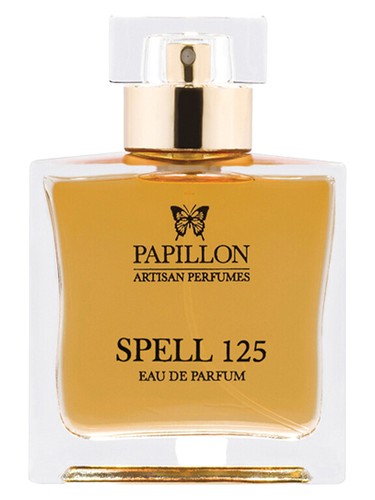
Spell 125
Seu armário
Entre para dizer que você tem, já testou ou quer este perfume. Suas marcações ficam privadas por padrão.
Criar conta é grátis e leva menos de um minuto.
Acordes dominantes
- âmbar
- amadeirado
- aromático
- balsâmico
- floral
- animálico
Pirâmide olfativa
Saída
O primeiro impacto, nos primeiros 15 minutos.
Coração
A personalidade do perfume, por algumas horas.
Não informado pela comunidade ainda.
Fundo
O rastro que fica na pele até o fim do dia.
Não informado pela comunidade ainda.
Como ele se comporta
Fixação, projeção e ocasião — votos da comunidade internacional somados aos daqui.
Gênero
47 votos
Quando usar
- Inverno: 28 votos
- Primavera: 22 votos
- Verão: 11 votos
- Outono: 32 votos
- Dia: 27 votos
- Noite: 32 votos
Onde encontrar
Nenhum decant à venda nem vaquinha aberta agora. Marque Quero ali em cima — é o interesse da comunidade que puxa a próxima vaquinha.
Ver vaquinhas abertasQuem gosta deste também gosta
Perfumes próximos no gosto de quem curte este — bons candidatos para o próximo decant.
Impressões da comunidade internacional
Traduções chegam aos poucos — textos em inglês por enquanto.
- em inglês
This review is for those who are looking for an ancient Egypt themed fragrance but are confused by the sometimes contradictory (and sometimes nonsensical) reviews of whether a said fragrance is actually Egypt themed or not. There are some fragrance reviews that would have turned me off to the idea of sampling, and that would have been most unfortunate in this particular regard. I hope this review helps and presents a consistent, logical case for those interested. Whether someone likes or dislikes this fragrance for other reasons is entirely subjectively warranted and is not the primary point of this review. Let’s simply start with some of the ingredients one can detect in Spell 125 and see if they have anything to do with ancient Egypt. Frankincense. Used for incense and embalming. Ambergris. Used in incense. Cinnamon. Incense and embalming. Sandalwood. Incense, perfume and embalming. Pine resin. Incense and embalming. The only one that stands out as not having relation to ancient Egypt as far as I know is black hemlock. Perhaps it has another purpose, or perhaps artistic license is alone reason to include it. Papillon Artisan’s Spell 125, while still being its own expression, has the same basic DNA of Sultan Pasha’s Thebes 1, which itself is a direct homage to Jaques Guerlain’s 1926 creation Djedi, as others have noted. Now, without knowing anything else it is obvious from Sultan Pasha’s naming of his fragrance after the city that was the capital of Egypt during the Middle and New Kindgom Eras that the ancients referred to as “Waset” and Guerlain’s Djedi, which refers to the Egyptian sorcerer from the fourth chapter of the Westcar Papyrus, that ancient Egypt is front and center. (Note: Sultan Pasha is also the nose behind Zoologist’s 2022 release Sacred Scarab, but I have not tested this and leave no further comment.) Now, before giving a (short) review of the fragrance itself, it is prudent to ask a few questions. Firstly, when someone leaves a review stating that a particular fragrance either does or does not smell like ancient Egypt, it is helpful to ask, “According to what reference point is the person making this assertion?” Secondly, after this is established it is only natural to move on to an even bigger question— How do we even know what ancient Egypt smelled like, anyway? Thirdly, if one is being a somewhat conscientious shopper, it’s helpful to ask what kind of fragrance house Papillon Artisan Perfumes is. Is it run by a nose who will slap a label on their fragrance for cheap attention and an attempt at a superficial money-grab? So, please allow me to attempt to answer these. Originally being an incense lover, principally of Japan and India, over time I got around to an interest in recipes for authentic kyphi or kapet, the Egyptian word for incense. It’s a long process that takes up to six months, but well worth the effort. One of my favorite recipes that arose from tinkering with what I found online uses frankincense, myrrh, pine resin, cinnamon, sandalwood, juniper berries, cardamom, dammar and a slight touch of jatamansi. At this point, you should naturally be asking a variation of question #2: How do we know this was even remotely like their incense? Well, we have the records of the ancient Greeks, individuals like Dioscorides, Plutarch and Galan. We have the inscriptions on temple walls such as at the complex of Edfu. While there is variation there is also a lot of overlap. And we’re still learning. For example, recently scientists have discovered evidence of ancient Egyptian use of dammar and birch. Dammar is from a tropical Asian tree and is sacred to both Buddhists and Hindus. I've smelled it often in temples in India. Birch resin is from Northern Europe. Obviously, the ancient Egyptians had a much more extensive trade route than previously assumed. Some seem to even think that the ancient Egyptians had virtually no trade at all! Speaking of, I literally read a review of Spell 125 where someone in all their ingeniousness quipped that they highly doubted they had access to pine in ancient Egypt. Oh boy...Yes, pine resin was used in Ancient Egypt and yes they had an extensive trade network. Now, about pine. Personally, I do not experience an overwhelming pine element in Spell 125. It’s clearly there, but is so balanced by the frankincense in particular that it isn’t an issue. Some people seem sensitive to it in reviews. My wife does not find it overwhelming, either. YMMV. (Update: A cool and rainy system has finally moved into this area of the country and with the increase in humidity the pine has moved much more to the forefront. Very interesting, and this may explain some of the discrepancy in the reviews. Warm dry weather seems to favor the frankincense note in particular.) Regardless, some people smell a note of pine and think, “Forest”. Perhaps they should also think, “Mummy.” Allow me to quote Dr. Barbara Huber, a doctoral researcher from the Max Planck Institute of Geoanthropology in Jena, Germany, regarding her olfactory research on the odor of the mummification practices of ancient Egypt. She reports on the eau de Mummy, “The dominant aroma is definitely a woody kind of pine-like scent.” She arrived at this conclusion from careful research utilizing gas chromatography-mass spectrometry, liquid chromatography-tandem mass spectrometry and high temperature GC-MS to analyze the contents of jars, flasks, burners and ointment containers. (By the way, this sort of science is a big part of the answer to question #2.) Lastly, from the above question list, Liz Moores of Papillon takes a lot time and care between releasing fragrances, uses high quality ingredients and is a relatively small operation. Not exactly the type to engage in cheap tricks to fool people into buying products by engaging in marketing nonsense. Wow, this has gotten long. One more note for those of you who might be interested in an Egypt-themed fragrance. Papillon Artisan already has another, released in 2014, called Anubis. How does Anubis compare with Spell 125? They’re quite different. To sum them up, Anubis to me has this diurnal, sun-baked leathery smokey amber quality to its resinousness while Spell 125 is definitely of nightfall— dark, heavy and also resinous but in a uplifting, pleasant way that is difficult to describe. It probably arises from the interaction of the frankincense, ambergris, spice and sandalwood. It has zero smoke. Someone described it as referencing some sort of intersection of body and spirit or perhaps the meeting of the relative and incorporeal planes. I would agree. Recommended. (However, I cannot wear Anubis at all as wonderful as it is, while Spell 125 I could wear regularly. Just putting that out there. They are siblings, but day and night.) In summary, this is now in rotation with my favorites and I’ve already bought a full bottle after two months of testing.
- em inglês
If Anubis feels like a ritual chamber hidden deep within a hot, dusty desert, then Spell 125 feels like its temperate counterpart beneath ancient coastal pines. Of course, ancient Egypt had no forests, so where Anubis smells of desert sands and temple walls, Spell 125 imagines the same ancient spirituality transplanted to the lost port of Thonis-Heracleion, where the scents of imported Aleppo pine resin, precious woods, balms, and other resins mingled with the incoming Mediterranean sea winds. The ritual remains; only the scenery has changed. This is potent, raw, and unapologetically atmospheric. From the first spray, dense frankincense takes center stage and never really leaves. But this isn't incense smoke. The resins here smell unlit—sticky, woody, and fresh. There are no church vibes or clouds of ecclesiastical smoke. Instead, it smells of resin itself. Pine and black hemlock quickly join the frankincense, creating a green, coniferous accord that feels almost startlingly natural. And the choice of pine here feels deliberate. In my own interpretation, it's Aleppo pine. Why Aleppo pine? Aleppo pine resin was used by ancient Egyptian priests as both a weatherproofing sealant and an important ingredient in the embalming process. Beyond the familiar coniferous smell, this resin carries a distinct cooling facet that resembles camphor. When raw—or burned too hot—it can develop a sharp, acrid edge reminiscent of turpentine or gasoline. Suddenly, those strange medicinal and fuel-like nuances in Spell 125 start to make perfect sense. This camphoraceous, balsamic edge runs through it all, along with something faintly medicinal. At times, I even catch that strange gasoline-like nuance lurking in the background, adding to the feeling that something ancient and mysterious is taking place. Ambergris brings a salty, airy muskiness that reminds me of the sea somewhere beyond the trees. Wind carrying salt inland. Waves crashing in the distance. Like Anubis, there is also that distinctive waxy smell of old candles that have just been extinguished. Not smoke, but warm wax lingering in the air after the flame is gone. The overall atmosphere is haunting and deeply evocative. Not a ritual in progress, but the lingering traces of one. The scent of resin-stained storerooms, imported woods stacked along ancient docks, and temple offerings waiting to be carried inland. Pine resin, frankincense, salt air, old wax, and precious balms drifting together on Mediterranean winds. There is something grounding about it, yet also strangely otherworldly—as though the lost port of Thonis has briefly resurfaced from the depths, carrying with it fragments of forgotten rites and vanished worlds. Not for everyone. But if you enjoy fragrances that feel more like places, stories, and experiences than perfumes, Spell 125 is truly something special.
- em inglês
Behold, I have come before you bringing to you Truth, having repelled for you falsehood. Papillon's Anubis is my favorite fragrance I have smelled so far, head and shoulders above the rest, so I had very high hopes going in. Unfortunately for me, Spell 125 was a different scent and it did not change what I thought was possible like Anubis did (there can only ever be one first), so I put away my tester and forgot about it. Today, I took it back out to figure out what exactly I liked and didn't like about it. It seemed entirely different this time. I have not killed. Comes on spicy and woodsy, but blended & complex, not one-note. There is soft mystery. I have not diverted water in its season. The only hard edges it has fade quickly. If I were to analogize Spell 125 to a sound, it would be a tonal, resonant, heavily pitched-down casette transport - a deep, insistent, textured drone. Think like a deeper version of the first few seconds of Ethel Cain's Perverts. It is deep green in a field of black with pinprick stars. I have not extinguished a fire at its critical moment. It is much gentler than Anubis. It is sinuous, multilimbed like a fungus, it props up and pushes forward without overasserting itself. It has a distinct magical body (one that I didn't feel at all in Coven). I have made divine offerings for the gods, invocation-offerings for the blessed dead. Save me, then. Protect me, then. It is the maturation of what I see in Anubis, but it is not time for me to mature in this way. I see the echos of that vigor, not subdued or diminished, but knowing what they want and having gotten it. Self-assured, effective, moving the world and moving in the world. I think that in a few years I will return and find that I have become someone who this scent fits like a glove. I am one who provides assistance in the presence of the gods, who knows the requirements of their bodies. This scent conjures, to me, snakes moving backwards and forwards through time. I think of the first time I smelled it and how disappointed I was. I think of now, when I can approach it as itself, and I appreciate it much more. I think of possible futures where this is something I wear often. I think of those future selves I dream, reaching back through this scent and guiding me. I think of the magic that went into its construction and the magic worked by those who wear it. I think that if you know the flows, weave the net, liaise between our world and others, then you should try this. "Proceed, then. Behold, you are announced. Your bread is the Eye of Horus; your beer is the Eye of Horus; your invocation offerings on earth are the Eye of Horus," so says he regarding me.
- em inglês
Das Huffer hit the nail on the head. I own and obsess over Salome and Dryad (heck, pretty much every release from Papillon, if I’m being honest, but Salome in particular is my signature) and the magnetic undercurrent of sensual skin musk shared across these perfumes instantly ensnared me. My enthusiasm for Spell 125 cannot be understated - I’m springing for a full bottle of this as soon as I can. The lush “skin but better” DNA throughout all her works is potent and naturalistic and gorgeous and addictive, but Spell 125 takes this familiar musk and imbues it with transcendent purpose. It is hard to capture. Liz Moores continues her artistry of weaving an olfactory tapestry that defies convention and transcends language. It’s witchcraft. It’s worship. It’s pure exaltation of materials blended with intent, though if you were to ask me to expound on individual notes, I’d have a hard time. The ambergris is subsumed into herbal, incensy splendor leaving a veil of slightly salty, cuddly, good human smell, with a touch of the what I can only describe as subtle vanilla and gently sweet, buzzy honey that grounded Bengale Rouge after the exploding lush florals subside (is that the Ylang? Maybe - it feels so entirely abstract). It’s soothing in the way a walk through lush forest and over ancient glacial stones might be, hand in hand with your love, kissing their neck, dewed with a little calescence, a little salt sweat. The pine in this is unbelievable. Inviting, naturalistic, and ephemerally woven with the other ingredients in an extraordinary, diaphanous dancing symphony. I simply can’t convey a proper approximation of it beyond that. It’s everything good about a wild and dark and fragrant forest tempered with the flame and fine materials and refinements of civilization. It’s the stuff of Faerie - a testament to the source and energy of things, held in supreme, joyous balance. Harmonious, above all things. Spell 125 speaks to Papillon’s compelling legacy of olfactory storytelling and supreme alchemy. This is art. And it is beautiful to behold.
- em inglês
I have been wearing this a lot lately, via a decant my wonderful friend has traded me for my bottle of Papillion's Bengale Rouge. A nice situation where he preferred what I had while I preferred this. Within 30 minutes this enters a long phase where all I smell is Fred Soll's Frankincense & Myrrh stick incense. Fred Soll makes his incense with a thick base of pinion pine collected in the Southwestern United States. The sticks are huge and cling to the package and each other and create copious amounts of exalting smoke. I love his incense and recommend purchasing, if only to compare to Spell 125, as they exist in the exact same territory for several hours... it is a beautiful place. Later, perhaps two hours after application, other notes emerge but they are much harder to identify for me. Perhaps the ambergris twisting around pine and smoking olibanum. I'll keep exploring it. While I'm still trying to figure out if I need a full bottle, I can report that it is enchanting, evocative, spiritually uplifting stuff. I think Liz Moores' creative palette centers around spirit, which I personally appreciate. One last thing: below there is this sarcastic and negative review that is well-written enough that it might turn you against this perfume. I know as well as most that one bad review here can convince me to close the tab. I took a look at their other reviews and stopped reading after the 30 most recent were all negative. It is somewhat funny that the person wrote it on Christmas Day. There are people in this world blessed with the gift of gab but cursed with bitterness, and they are very good at showing you what they see: an ugly world full of disappointments. Rumi advises us, "When you go to a garden, do you look at thorns or flowers? Spend more time with the roses and jasmine."
Resenhas da comunidade
0 comentáriosEntre na sua conta para comentar e resenhar.
EntrarAinda ninguém resenhou este perfume
Seja a primeira pessoa a contar como ele se comporta na pele: projeção, fixação e a ocasião certa.
Encontrou um erro ou falta informação? A comunidade melhora o catálogo junto.