Santi Burgas
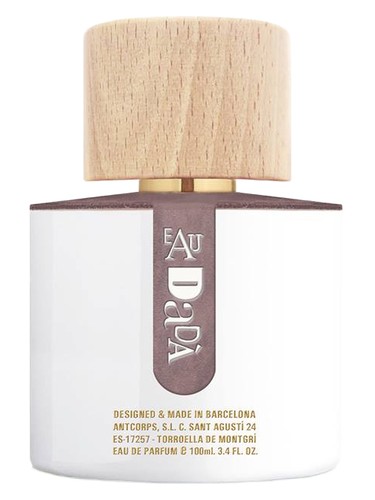
Eau Dada
Seu armário
Entre para dizer que você tem, já testou ou quer este perfume. Suas marcações ficam privadas por padrão.
Criar conta é grátis e leva menos de um minuto.
Acordes dominantes
- especiado quente
- âmbar
- patchouli
- amadeirado
- balsâmico
- oud
Pirâmide olfativa
Saída
O primeiro impacto, nos primeiros 15 minutos.
Coração
A personalidade do perfume, por algumas horas.
Não informado pela comunidade ainda.
Fundo
O rastro que fica na pele até o fim do dia.
Não informado pela comunidade ainda.
Como ele se comporta
Fixação, projeção e ocasião — votos da comunidade internacional somados aos daqui.
Gênero
1 votos
Quando usar
- Inverno: 1 voto
- Primavera: 1 voto
- Verão: 0 votos
- Outono: 1 voto
- Dia: 1 voto
- Noite: 1 voto
Onde encontrar
Nenhum decant à venda nem vaquinha aberta agora. Marque Quero ali em cima — é o interesse da comunidade que puxa a próxima vaquinha.
Ver vaquinhas abertasQuem gosta deste também gosta
Perfumes próximos no gosto de quem curte este — bons candidatos para o próximo decant.
Impressões da comunidade internacional
Traduções chegam aos poucos — textos em inglês por enquanto.
- em inglês
I expected a little more from Eau Dadà, more specifically I expected a more prominent oud and a slightly harsher, more rugged composition. Better said is that I wish it was like that, because my expectations shouldn't have deviated that much given that the end product that Eau Dadà is fits quite well with the style of perfumery of Santi Burgas. Now, don't get the wrong idea, because I quite enjoy Eau Dadà. But it does feature close similarities to Pachulí Kozha, which I did not expect. For one, both fragrances start off very medicinal, with the patchouli being responsible, also adding earthy and woody undertones here. However, unlike with Pachulí Kozha, I feel that patchouli plays a more central role in Eau Dadà. The patchouli is immediately sweetened with some resinous touches, while some spiced saffron is nicely incorporated in the blend without ever becoming overpowering. As for the oud used here, it's Trai Prachin oud, and apparently it's a much milder and sweeter type of oud, which explains the lack of any barnyardy tones. For some, that might be a good thing, while for others, not so much. There's a gentle whisper of incense enveloping a rather clean and almost honeyed orange blossom, without much of a citric kick. This all sits on what I believe is my main gripe with Eau Dadà - a vanillic base. The base carries the rest of the composition on this sweet, ambery vanilla, with a clear balsamic/resinous warmth from the labdanum and some tonka bean for the sake of a light nutty touch. There's little woodiness here to help contrast the vanilla, but I'll give it a narrow pass since it's got the balsamic/resinous support, making it not as vanilla-boring sweet. Still, I can't help but feel that a proper oud here to keep things dirty would've turned things from an "ok" to a "might consider". Nothing out of the ordinary in terms of performance. Just like most other Santi Burgas I've tested, performance on my skin was decent, not excellent. About 9 hours tops for longevity, with moderate projection for the first 2 hours, taking a gentler approach afterwards up until hour ~5 where it's largely a skin scent. Just like with Pachulí Kozha, I did struggle a little to pinpoint the projection/sillage. Given the largely resinous structures in both, some heat would certainly help in pushing power. But I think Eau Dadà just leans too sweet to be considered in the middle of summer. But apart from the chart-topping heatwaves of the year, I'd say Eau Dadà is fairly versatile. It's not exactly an everyday scent for the office or school, but for a slightly more "moody" day of the week to add a little more excitement in your routine. But it's unfortunately a pass for me. And it's a simple reason why: just too sweet. If that was purposefully made for a little more mass-appeal, I suppose it succeeded. It is a likeable scent all-around, not leaning at all too heavily on the resins some might find a little challenging (for whatever reason). However, on the other side of the spectrum, I think many niche-invested fans would agree that incorporating a proper stinky oud here, not letting it completely take the wheel, but just blending in to properly balance the sweetness would've made Eau Dadà all the more appealing, at least for me. Now, Pachulí Kozha feels like its closest competitor, each featuring their own distinct accords. Eau Dadà retails for about €185 for 100ml, while Pachulí Kozha asks for somewhere around €200-€230 for 50ml. Value-wise, Eau Dadà might have the edge, but composition-wise, I'd lean towards the Nishane, simply because it's a little less sweet. Presentation: 7.5/10 Scent: 7.5/10 Longevity: 7.5/10 Projection: 6/10 Versatility: 8/10 Value for Money: 5/10 Overall: 6.9/10
- em inglês
Eau Dada turns an earthy, thick note like patchouli into a summer fragrance, injecting sunshine into damp garden soil. There are no citruses or floral notes, yet Eau Dada does it somehow. Same for the subtle medicinal hues of saffron and oud, almost undetectable but still there. It's all bright and shiny, a daylight fragrance, A bit of incense, a drop of sour bitterness. A lot of fine-tuning. Density is carefully minimized. An idealized, open-air countryside feel, but without getting your hands dirty.
- em inglês
Balmy patchouli with light green minty touch on white chocolate saffron base. It’s like a minimalistic diffused Coromandel EDT. It’s doesn’t feel synthetic, but like most - leans slightly more masculine than I’d like to wear. I like it, for how wearable it is, compared to many others in the genre. It doesn’t tire in spring weather and this profile is mostly an autum-winter delight.
- em inglês
It's quite a standard patchouli, incense, cardamom, with slight saffron. Few hints of orris, tonka beans as the sweet note, and some soft agarwood. It's quite sophisticated and gentle, yet heavy and strong. After alittle while (10+ minutes) it goes slightly soft yet tingly with patchouli and tonka bean, and slightly minty. A great creation after all.
Resenhas da comunidade
0 comentáriosEntre na sua conta para comentar e resenhar.
EntrarAinda ninguém resenhou este perfume
Seja a primeira pessoa a contar como ele se comporta na pele: projeção, fixação e a ocasião certa.
Encontrou um erro ou falta informação? A comunidade melhora o catálogo junto.