Chanel
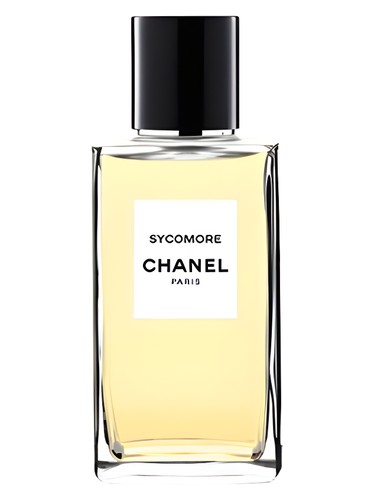
Les Exclusifs de Chanel Sycomore
Seu armário
Entre para dizer que você tem, já testou ou quer este perfume. Suas marcações ficam privadas por padrão.
Criar conta é grátis e leva menos de um minuto.
Acordes dominantes
- amadeirado
- aromático
- terroso
- especiado fresco
- tabaco
- talcado
Pirâmide olfativa
Saída
O primeiro impacto, nos primeiros 15 minutos.
Coração
A personalidade do perfume, por algumas horas.
Não informado pela comunidade ainda.
Fundo
O rastro que fica na pele até o fim do dia.
Não informado pela comunidade ainda.
Como ele se comporta
Fixação, projeção e ocasião — votos da comunidade internacional somados aos daqui.
Gênero
43 votos
Quando usar
- Inverno: 41 votos
- Primavera: 51 votos
- Verão: 25 votos
- Outono: 57 votos
- Dia: 61 votos
- Noite: 35 votos
Onde encontrar
Nenhum decant à venda nem vaquinha aberta agora. Marque Quero ali em cima — é o interesse da comunidade que puxa a próxima vaquinha.
Ver vaquinhas abertasQuem gosta deste também gosta
Perfumes próximos no gosto de quem curte este — bons candidatos para o próximo decant.

Impressões da comunidade internacional
Traduções chegam aos poucos — textos em inglês por enquanto.
- em inglês
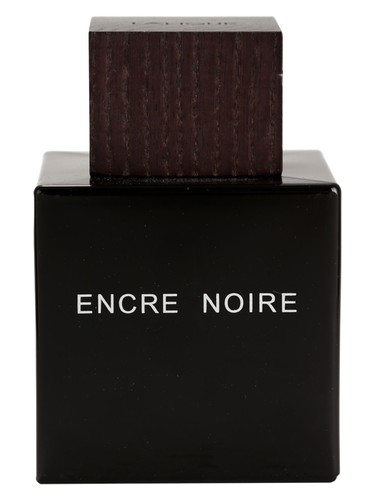
Jacques Polge's Sycomore is an attempt to respond, with contemporary architectural precision, to the name and atmospheric trace Ernest Beaux left behind in 1930. With the 2016 transition to Eau de Parfum concentration, however, this crystalline EDT has essentially vanished from circulation. On contact with skin, what rises is a silver-needle sharpness of cypress and juniper. Beneath it, the vetiver root begins to pulse—quietly, but with steady authority. The smell of a root freshly pulled from the earth and cut open, where green sap, damp soil, and faint smoke meet. This is not the concept of vetiver. What appears here is raw matter, presented with a quiet clarity, before any conceptual sublimation. The grounds for such direct presentation lie in the intersection of two aesthetics that have always coexisted within Chanel. One is the abstractionist tradition of Beaux and early Polge—the aldehydic halo of N°5, the sandalwood plane of Bois des Îles. These operations strip materials of their concrete character and elevate them into idea. The other is the lineage of Henri Robert (1954–1978): the directness of galbanum and lily of the valley in Cristalle (1974), the lucid classical chypre of Pour Monsieur (1955). Here materials speak as themselves, with dignity. Sycomore EDT is a dialectical synthesis of these opposed traditions. It inherits Beaux's material list (vetiver, violet, tobacco, aldehydes) while departing from his abstractionist method, and it connects to Robert's commitment to materials as themselves while introducing an architectural rigor that Robert's own works never possessed—a triple operation: departure from Beaux, connection to Robert, transcendence of both. The way vetiver stands upright in the opening—not veiled in mist but supported by structural scaffolding (cypress, juniper)—is the concrete embodiment of this third way. The 1930 formula is poorly attested, and our characterization of "the Beaux method" depends on Chanel's limited internal disclosures; I flag this as speculation. What enables this synthesis is the solution to a problem intrinsic to vetiver as raw material. Vetiver oil contains components of widely differing volatility—light terpenes and trace citrus-like compounds on one side, the khusimol backbone and α/β-vetivone side chains on the other—and the "audible" molecules change with time. Once the light volatiles disperse, a vetiver-soliflore left to itself collapses to its heavy residues alone; the perfume mutates into something else. Most vetiver-centric perfumes fall into "magnificent top, impoverished drydown" or its inverse precisely for this reason. In Sycomore EDT, each volatility tier is engineered to anticipate or inherit a different facet of vetiver. The coniferous sharpness of the top anticipates vetiver's anisic coolness; the heart presents the khusimol skeleton and α/β-vetivone side chains of vetiver proper; the synthetic sandalwood base—given the period and price point, plausibly a Polysantol- or Javanol-type blend—inherits the dry woody residue from khusimol. One hour in, two hours in, the wearer continues to hear variations on the same theme. Edmond Roudnitska (1905–1996, perfumer of many Dior compositions) theorized perfumery as forme olfactive—olfactory form—and took as his ideal a composition that preserves its theme along the time axis. Sycomore EDT is one of the more successful contemporary realizations of that ideal. And this linearity is a state of physical chemistry achievable only at EDT concentration. At EDP concentration, diffusion in solvent slows, the tiers superimpose along the time axis, and the linear architecture collapses into an undifferentiated "luxurious forest." Masterpiece status, in this case, depends on a specific concentration range. Complementing this temporal control is an inversion of the aldehyde function. In Chanel's tradition, aldehydes have served as veil: a sheath that covers the rawness of floral material and abstracts it. In Sycomore, the aldehyde functions as blade. Natural vetiver oil carries—depending on extraction conditions—a faint glandular suggestion: thin wool, the oil of human skin (this is thought to derive from trace sulfur compounds, though their presence in the specific lot used in Sycomore cannot be confirmed without disclosed formula). In Encre Noire (Lalique, Lorson) this haze is covered by Iso E Super; in Vétiver Extraordinaire (Malle, Ropion) it is swaddled in cashmeran and a woody-musk envelope. In Sycomore, it is simply gone—not covered, but surgically excised from the outset. The vetiver outline is preserved entirely intact while the human warmth and the animalic facet alone are selectively removed. A tool once deployed in the service of abstraction is here turned to purification. The most elegant of revolts. Parallel to this purification runs another operation: smoke as constructive inscription. One of Sycomore's central impressions is "dry smoke"—yet if the vetiver used is indeed Haitian (a claim by The Perfume Shrine and other secondary sources), the raw material itself is markedly less smoky than Javanese vetiver. The smoke at Sycomore's center has not been extracted from vetiver. It has been read into vetiver—by cypress terpenes, juniper pinenes, and very likely a trace guaiacol-class adjunct. A property the material did not possess is brought into being by structure. Technically, this is trompe-l'œil; critically, it is the sister theorem to the aldehyde inversion. Subtraction is not mere deletion—it is also the carving of contours the material never had. What appears beyond the pared warmth and the incised smoke is the absence of olfactory-experiential narrative. Not the absence of narrative. Chanel does provide Sycomore with a mythology—Auvergne’s volcanic landscapes, Mademoiselle Chanel’s childhood memories, autumn woods suspended outside of time. Yet this narrative remains largely external to the perfume itself. The fragrance is described mainly through texture and atmosphere: deep, smoky, earthy, warm. It does not dramatize its story from within. Compare this with other vetiver-centered compositions. Encre Noire constructs its ink fantasy internally: the name, the inkwell bottle derived from René Lalique's 1913 Biches design, and the fragrance materials themselves collaborate to perform "inkiness" as an olfactory effect. Vétiver Extraordinaire characterizes vetiver from within the accord itself—cold, metallic, mineral, almost pebble-like. Vétiver Tonka frames its warmth and softness directly through the texture of the perfume, while the Hermessence line as a whole is articulated olfactorily as "haiku-like" compositions. Timbuktu is perhaps the clearest example: the references to Wusulan ritual, Malian smoke ceremonies, cypriol, incense, and dryness are not decorative framing devices surrounding the work, but are structurally embedded into the perfume's sensory logic. In each of these cases, narrative is enacted through the vetiver itself rather than merely attached to it externally. Sycomore operates differently. The fragrance does not intrinsically encode Auvergne in the way Encre Noire encodes ink or Timbuktu encodes ritual smoke. Three hours into wear, what remains is less a place than a material presence: vetiver itself, suspended within the dry structural scaffolding already described. Forest, ash, and campfire imagery certainly arise in criticism and wearer testimony, but this does not contradict the point. If anything, it clarifies it. Because the fragrance only weakly scripts its own experiential narrative, it leaves unusually large interpretive space for projection. The wearer's imagination is permitted to move freely, while Chanel's official mythology hovers above the composition rather than being fully metabolized into it. The operation is structurally analogous to the work of Constantin Brâncuși. Brâncuși's Bird series and Endless Column preserve the recognizability of their objects while stripping away representational specificity—anatomical detail, expression, posture, anecdote. At the same time, Brâncuși himself surrounded the works with extensive philosophical, autobiographical, and Romanian-mystical discourse. There was never an absence of narrative around the sculptures. Yet the sculptures themselves do not perform those narratives internally. The object is presented prior to its story. Sycomore approaches vetiver in much the same way: vetiver is unmistakably present as vetiver, while the narrative attached to it remains largely a function of framing, interpretation, and projection rather than of the perfume's internal dramatic structure. Here it is worth recalling Luca Turin's review in Perfumes: The A-Z Guide, which called Sycomore a "magisterial gloss" on Duchaufour's Timbuktu and awarded it five stars. His observation about the anisic, cool treatment of smoky wood is accurate; but the hallucinatory frankincense, inflected by karo karoundé, that lies at the center of Timbuktu is not what Sycomore carries forward. Sycomore's smoke is drier, more architectural, more impersonal. Turin's comparison gestures at syntax, not at theme. The work also admits another reading: as Chanel's structural counter-statement against the niche boom of the 2000s—the period in which perfume fell into the loquacity of "concept." In the end, Sycomore EDT's greatest achievement lay in its understanding that subtraction can possess greater expressive force than accumulation. What Jacques Polge constructed here was not a narrative of vetiver, nor even an idealized image of it, but a precise architecture through which the material could remain present without rhetorical excess. The 2016 transition to Eau de Parfum altered that equilibrium. As diffusion slowed and the volatility tiers began to overlap, the linear structure softened into a richer, denser atmosphere; beautiful in its own right, but no longer governed by the same crystalline discipline of time. The original EDT now survives mostly as scattered bottles, secondary memory, and the critical language built around it. Yet perhaps this is fitting for a work so fundamentally concerned with absence, contour, and restraint. To seek out Sycomore EDT today is less an act of nostalgia than an attempt to encounter a rare achievement in modern perfumery: a composition in which structure itself became the source of emotion, and in which silence was allowed to remain silence. 10/10
- em inglês
This is a comfort scent for me. It makes me feel calm, warm and comforted. On my skin it is fairly quiet. Doesn't project much, especially after the first hour or so, but it does linger most of the day. As others have noted, the vetiver is front and center from beginning to end. To my nose this vetiver is dry and smokey, almost incense-like. It brings to mind smoldering bundles of dried vetiver grass on parched earth, smoke rising into the air. But this smoldering vetiver is softened with the other notes that are blended such that I can't really make them out individually (but I'm also new to fragrances so my nose is partly to blame). But this softness makes the overall scent more plush and pulls the fragrance into unisex territory. To me it seems better suited to spring and fall than the more extreme seasons, but I think it could be worn all year (with some care in summer). In fact, I live on the equator, so it is always summer here, and I wear it without any issues. EDIT: The more that I live with the fragrance, the more I love it and the more I want to smell it. It's also now clear to me that the cushion of plush sweetness that surrounds the smoldering vetiver (and which actually outlasts the vetiver in the deep dry-down) comes largely from a sweet, creamy sandalwood. Likewise, I've also realized that much of the smoldering quality of the vetiver comes from a tobacco note. Previously I had been unable to discern any tobacco, but now I realize that it is seamlessly grafted onto the "back end" of the vetiver, making it hard to detect as a distinct note but contributing to the rich smokiness of the vetiver base. Finally, I have also noticed that if I wear clothing over the place I've applied the scent, it changes the character of the aroma. Since I work in a casual environment in the tropics, I usually wear short-sleeve shirts. However, one day when working in a frigid air-conditioned room, I was wearing a sweatshirt, and I kept getting whiffs of a bright, soapy scent. It took me some time to realize that it was actually the Sycomore. It was as if the thick sweatshirt was filtering out the heavier molecules of the base and only letting the lighter, shimmering ones through.
- em inglês
First things first, to you people that have only tried Sycomore once and didn't like it; please if you can, try it again! I got hold of a mini splash bottle a while ago and to begin with, all I could smell was stale cigarette smoke/ashtray.. Not exactly what I want to smell like! It smelled precisely like some dude coming in from a smoke break outside, plus a faint trace of his generic cologne. I disliked it immensley and felt a sigh of relief, money saved! However.. it grew on me LIKE CRAZY and only a couple of weeks (and trials) later, I found myself drawn to the dusty, dry warmth of Sycomre like a moth to a lightbulb and like being under a spell, I was completely unable to stop smelling it. Now I'm head over heels in love with this masterpiece, and consider it one of my absolute favorites from the Les Exclusifs. I haven't smelled Encre Noire which so many compare Sycomre with, but I'm sure that's a great one too. I mean, if it's related to Sycomore how can it not be? Sycomore smells dusty and peppery like dried hay in an old, abandoned barn, warm like freshly made cinnamon buns (without the sugar) and aromatic and "outdoorsy" like tree bark and smoky bonfires. To me Sycomore manages to smell otherworldly and natural at the same time, which is amazing! It's like a trip to some ancient forest, far from civilization. All is nice and relaxing except the temperature is a bit too high, the sky is overcast with dark storm clouds and everything seems just a bit too quiet. Wait.. did I just see something in between those old, mossy pine trees over there? A witch perhaps? The words that first come to my mind smelling Sycomore, are safe and comforting, however unsettling. It literally makes me feel like I'm being embraced by a huge hunky beast of a man, LOL! He might look threathening with his thick beard, huge arms and all that, but on the inside he is gentle as a lamb... or is he? That dark, unsettling streak never leaves the picture completely. It's always there, lurking somewhere in the background. As far as the Les Exclusifs go, Sycomore is one of the longest lasting ones and the sillage is moderate to heavy. A winner!
- em inglês
Chanel Sycomore, for me, is point in case that our tastes are ever evolving. I first smelt Sycomore three years ago when I was at a Chanel boutique, but instead settled on No 22. If I relived that exact experience tomorrow, the outcome would be very different. I can no longer tolerate No 22 for myself and would pick Sycomore without any second thought. A few months ago I realised that vetiver is a smell I yearn for. I love its earthiness, greenness, and smoky facets. I came to this conclusion from burning pure vetiver oil in my room, the smoky freshness is absolutely sublime to me. Sycomore enhances the most beautiful aspects of the pure vetiver extract, but adds a particular Chanel chicness to make it into an utterly wearable work of art. Longevity is great for an EDT, I do a few replenishments throughout the day but I would do that with most EDT’s. I really enjoy it sprayed on clothes (particularly wool & cashmere). Vetiver is a traditionally masculine note, but I think Chanel Sycomore would be devastatingly chic worn by a woman. Sycomore is intriguing, chic, wearable, and addictive. Sycomore, to me, is not a skin scent nor is it a perfume that wears its owner. I do, however, find it an extremely assertive fragrance and you do need to really love and appreciate Sycomore in order to carry it off. I suppose when I had my first Chanel visit and settled on No22 I wasn’t quite ready for the world of Sycomore... Sycomore demands a strong sense of self from its wearer. Although I would wear it both day and night, I would never dream of wearing it in my ‘kick around’ clothes. It requires its wearer to have an assured presence to match the fragrance lingering around them. Sycomore is both modern and old-world to me, a juxtaposition I cannot verbalise but just a feeling it gives me when I wear it. I’m so happy I discovered Sycomore, its a true beauty. PS, I highly recommend pure vetiver oil used in an oil diffuser for those of you that cannot get enough of Sycomore.
- em inglês
Thank you, Chanel, for Sycomore. As someone who likes earthy, woody frags it's a gamble to find ones that aren't overly masculine. Initially, Sycomore is quite masculine, then veers more feminine. The opening has an appealing smokiness. I got some pepper, too, which fades quickly, but the smokiness persists. From there it morphs into a clever blend of cypress and juniper that creates a gorgeous dry woodiness. And oh, that vetiver! Lovely with the sandalwood. Mouchette said it well - "outdoor chic in a bottle." If smoke + wood + earth sounds masculine, it is. At first, I thought there were no softening florals, nothing to counter the masculinity, but happily wearable. When I realized I was wrong, I had to come back and edit my review. The vetiver came out to steal the show from the cypress/juniper, coupled with a wistful floral note. (Violet?) The earlier-century green Chanels are very manicured, like a well-kept 19th century mansion. There's nothing so posh or garden-y here. This is a dry wood where the crackling leaves mingle with the scents of the earth and the fragrant trees. Chanel tends not to work for me, never mind the price tag. I'm also wary of projecting anything that screams "high-end brand" as distinctively as some Chanels. Love experiencing them, would never wear them. Fortunately this is wonderfully complex and natural fragrance without having that quality. Still VERY sophisticated, though. Edit: Well, I've certainly learned my lesson about getting excited and writing a review before a scent goes through its whole progression. For every turn in the tale I came back to rewrite - bringing the grand total to an embarrassing eight edits. Sycomore has some beautiful surprises.
Resenhas da comunidade
0 comentáriosEntre na sua conta para comentar e resenhar.
EntrarAinda ninguém resenhou este perfume
Seja a primeira pessoa a contar como ele se comporta na pele: projeção, fixação e a ocasião certa.
Encontrou um erro ou falta informação? A comunidade melhora o catálogo junto.