Anatole Lebreton
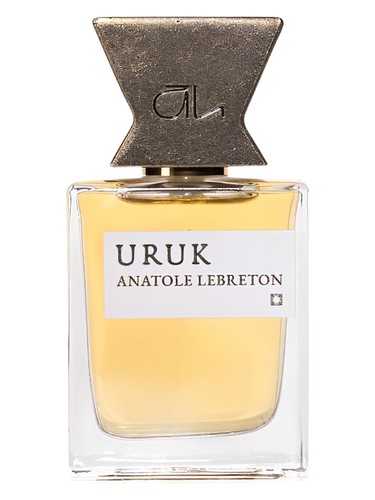
Uruk
Seu armário
Entre para dizer que você tem, já testou ou quer este perfume. Suas marcações ficam privadas por padrão.
Criar conta é grátis e leva menos de um minuto.
Acordes dominantes
- âmbar
- especiado fresco
- especiado quente
- amadeirado
- balsâmico
- almiscarado
Pirâmide olfativa
Saída
O primeiro impacto, nos primeiros 15 minutos.
Coração
A personalidade do perfume, por algumas horas.
Não informado pela comunidade ainda.
Fundo
O rastro que fica na pele até o fim do dia.
Não informado pela comunidade ainda.
Como ele se comporta
Fixação, projeção e ocasião — votos da comunidade internacional somados aos daqui.
Gênero
7 votos
Quando usar
- Inverno: 5 votos
- Primavera: 1 voto
- Verão: 0 votos
- Outono: 3 votos
- Dia: 1 voto
- Noite: 5 votos
Onde encontrar
Nenhum decant à venda nem vaquinha aberta agora. Marque Quero ali em cima — é o interesse da comunidade que puxa a próxima vaquinha.
Ver vaquinhas abertasQuem gosta deste também gosta
Perfumes próximos no gosto de quem curte este — bons candidatos para o próximo decant.
Impressões da comunidade internacional
Traduções chegam aos poucos — textos em inglês por enquanto.
- em inglês
I cannot be the only one who prior to knowing the true inspiration for the perfume had the initial thought that Lebreton was making a reference to the Uruk of Tolkien's world. A few seconds later it occurred to me, after having instant recall of the frequent themes to Lebreton's creative musings, that he was referring to what we currently believe to be humanity's first metropolis: "Uruk, Mesopotamia - in the south of today's Iraq - 5000 years ago, the birth of writing. To better handle the flow of goods and foodstuffs in the city-state of Uruk, Sumerians used the tip of a dried cane to write nail-shaped signs on clay tablets. They matched these symbols to sounds or words, inventing the first writing system. An unprecedented invention, writing is a formidable creative act: an idea is materialized by symbols to which a meaning is assigned. Writing fixes language on a lasting medium, capturing spoken words that would otherwise vanish." Ok, yes, that is a fantastic muse, but my small inner nerd wished it smelled like Sauron's thralls. Uruk is the opposite of a snarling, spitting, violent, unwashed beast fully devoted to its totalitarian creator. But there is a whiff of an animal - something crude, rudimentary, and uncivilized living in the perfume. This is a cistus labdanum perfume, full stop. It is a beautiful showcase of the tremendous high notes, mid notes, and low notes of this ubiquitous material when, one, it is a superb raw material, and two, it is handled well and with well-judged adornments. The high notes: very quiet, oily, and bitter orange piths and skins; warm seed spices and aromatic tree barks of nutmeg and cinnamon-like notes; an earthy sweetness with a touch of jammy and pink florals. The orange and aromatic spice notes are the first to quieten, which is when cistus labdanum's mid notes become more apparent: beautifully bronzed, sticky, earthy, and balsamic resins; the sweetness becoming more benzoin-like; gentle animalics via leather, which does not have any tanning chemical notes, but rather smells like dirty and oily animal skins; and a facet unique to the mid frequencies in the form of incense. The incense has heat to it, an internalized glow like an ember, gently releasing tendrils of myrrh and frankincense smoke into the air. The low frequencies are the preceding frequencies shifted down a gear with the leathery animalics more of a sweetly fecal civet note that smells restrained rather than well behaved; the resins have a darker, earthier bend, the spices are more woody, and incense a luke warm resin. Cistus labdanum, from beginning to end, but with some gentle amplifications of incense and animalics. Passing sniffs of Uruk will lead one to think that this is a pretty linear perfume, and that is fairly true, but closer study reveals exquisite detail that is a bit rough around the edges in parts. Those primitive "words" Sumerians etched on clay tablets were just a small evolution to what protomen drew on cave walls, and not nearly as advanced as the symbols/pictographs of Egyptian hieroglyphics to come later, but it's that small step forward that resulted in a big leap towards written language. Forward thinking, elegantly simple - labdanum/humanity being the best that it can be - but yet still ancient, rudimentary and unrefined. There is still a lot further to go before reaching the point where humanity has Latin or Greek. I don't know how Lebreton managed to capture this turning point, but he did it. On one hand achingly beautiful, on another degenerated and ancient, while being captivating and smelling really darn good throughout. Excellent work.
- em inglês
I purchased it in person from Anatole at the 2025 Perfume Week in Grasse. I had first smelled it months earlier, at Esxence. And when I encountered it again months later, it was exactly the same. No changes. It was unmistakably him. There’s something about this perfume that doesn’t want to please you: it wants to dominate you. The listed olfactory pyramid is a map, but it’s useless if you’re not ready to get lost. The only thing that matters is knowing that at its heart lies labdanum, treated without mercy. Raw. Burnt. Dense. It smells like a fumigating ritual. Like an archaeological discovery still warm from the Mesopotamian sun. It is the birth of writing. The scent of the first symbol carved into mud. The skin of a priest, scorched by the sun, clothed in smoke. An ancient perfume, bottled in minimalist glass: four letters, a name engraved, no embellishments. Everything makes sense. Everything feels right. Lebreton composes with resins the way Sumerian scribes etched reed into clay. Primordial. Pre-linguistic. Pre-human. ig: @pietroparodi
- em inglês
Uruk feels like a dwelling, a bulwark, even, in the form of the densest labdanum. From within, its as if a Sang ritual takes place, a purification of pollution left from human indecency. It is the olfactory equivalent of cuneiform, to be deciphered slowly and intently, and marveled in its ancient form. The texture is exhilaratingly textural, raw, dry and yet effulgent—a warm nutmeg haze and a holy frankincense is the exaltation that almost frizzles among the thick resins. The facets here are many: medicinal, animalic, urinous, smolder, even somewhat sweet. The materials deriving from the Cistus ladanifer plant are in layers here: cistus oil, the most power fractions of labdanum resinoid. It is for me a rapturous pungency, putting a spell on me, having me consider the primeval in all of us, wanting to inhabit a space shared with the spirits of ancestors. What advice can they give us? What wisdom?
- em inglês
Uruk is a bit of a new take on the familiar incense/spice Oriental genre. The frankincense is silvery, the nutmeg as warm as sticking your nose into the spice jar, but somehow the effect is novel. I get almost a whiff of pickle juice too, which is better than it sounds. It really does feel coppery and hollow-resonant, like an ancient tomb or temple. The resins are nicely balanced to make it warm and lightly sweet, with the emphasis still on spice and frankincense. It dries down to be more frankincense-dominated, dry and crackling. This part goes on for ages and is quite enjoyable; it makes the gray, rather aloof scent of pure frankincense almost friendly! An excellent example of a “Fuck Yeah, incense/spice” scent, warmer and less rough than some, and thus easier to take, but as epic in spirit as anything from the Duchaufour school of austere grandeur.
- em inglês
This was very jarring on impact but in a way that rarely happens this far into this “hobby” so I was open to exploring it more. It felt almost cursed. Or well like a fabled cursed material kept locked away inside a black obsidian chest with cryptic markings and when studied is discovered to be a completely new element on the periodic table showing traces of alien organic matter. Potent invasive and beautiful. Familiar yet taken to an extreme that is rare on our planet. I fear I need it
Resenhas da comunidade
0 comentáriosEntre na sua conta para comentar e resenhar.
EntrarAinda ninguém resenhou este perfume
Seja a primeira pessoa a contar como ele se comporta na pele: projeção, fixação e a ocasião certa.
Encontrou um erro ou falta informação? A comunidade melhora o catálogo junto.